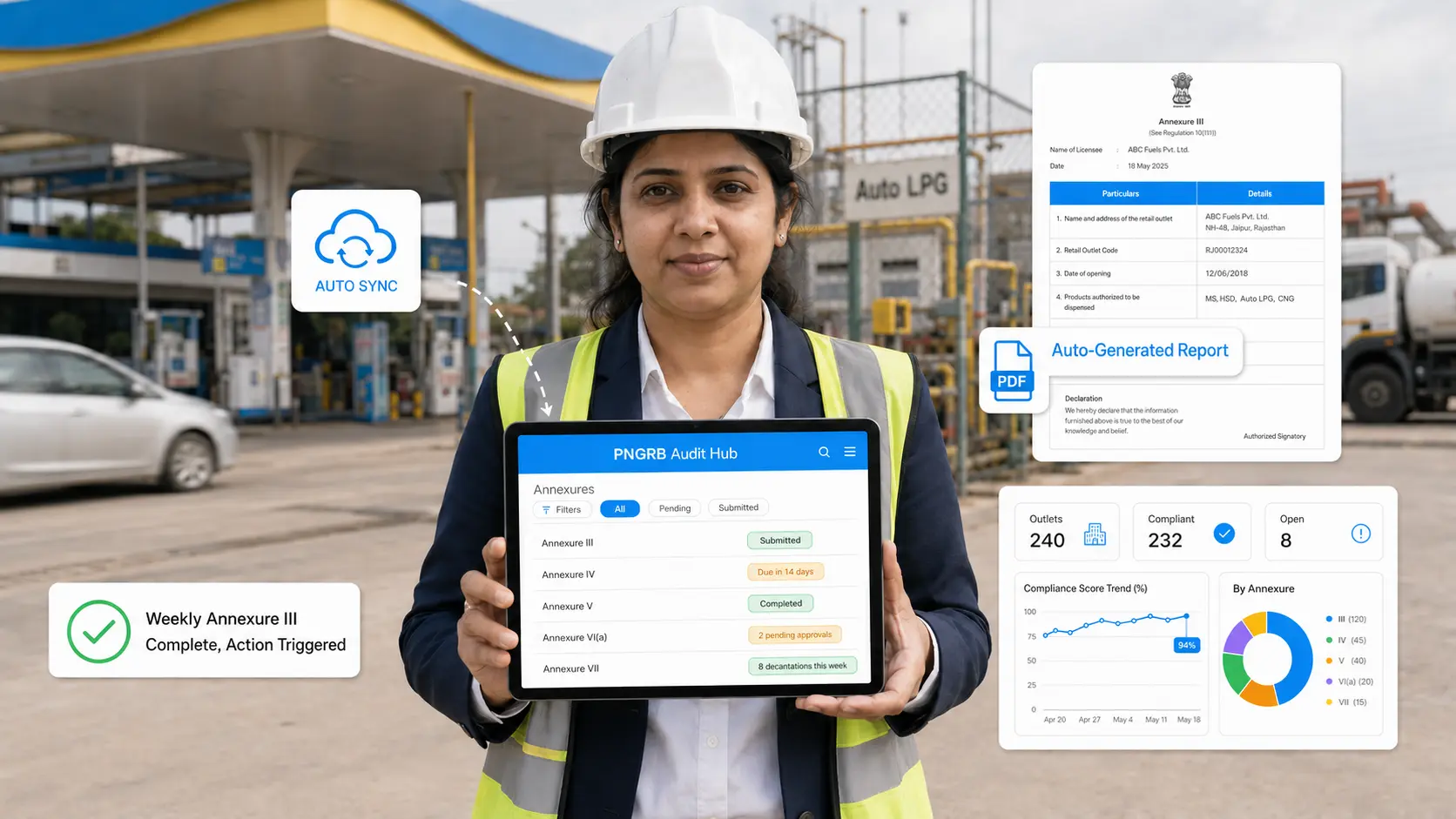

.avif)
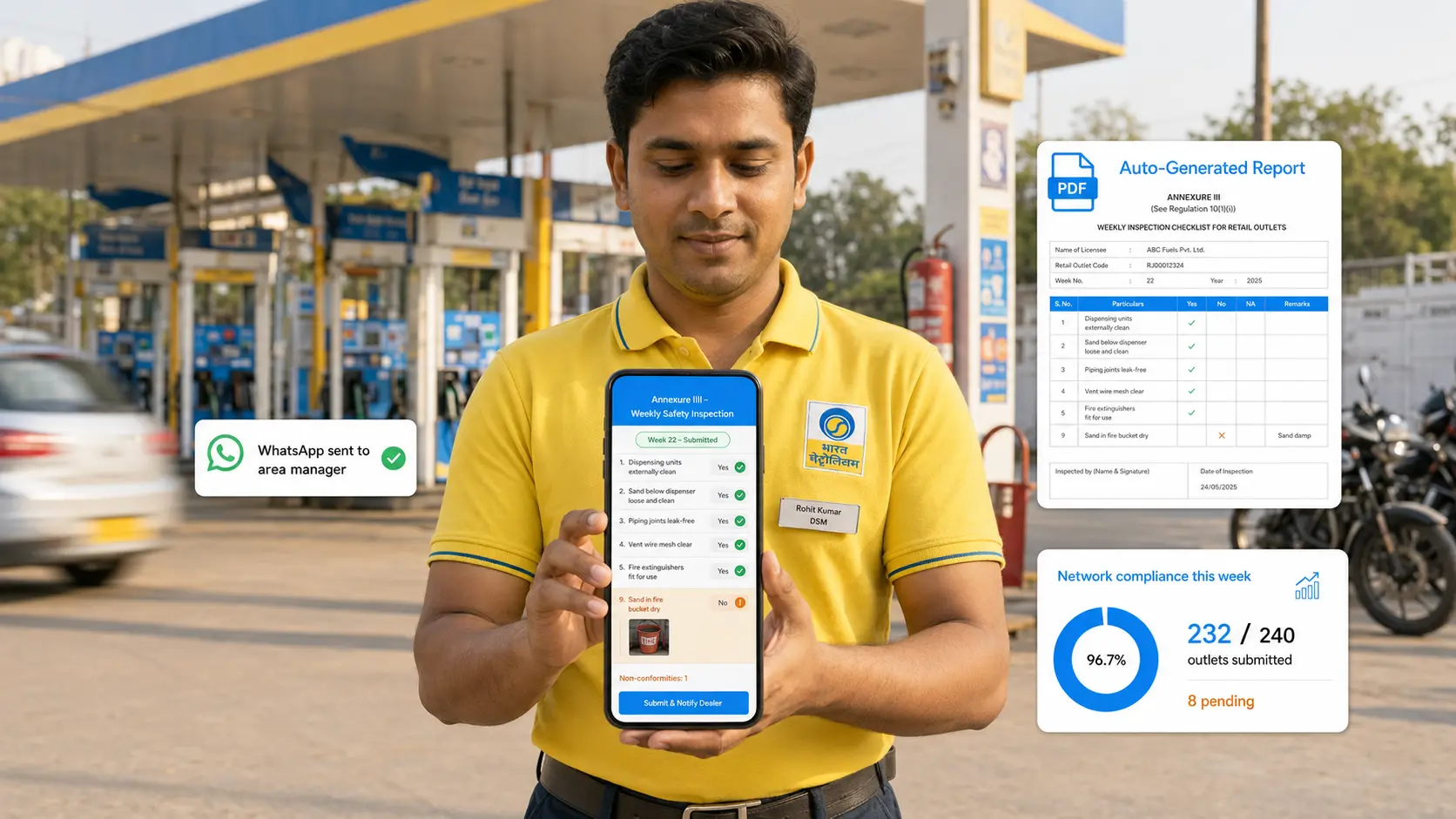
Two things go wrong when field teams submit data without an automatic notification system. The first is that submissions sit unacknowledged. A reading is logged, a photo is attached, the form is saved, and then nothing happens until someone checks the submission list hours later. The second is that submissions have no traceable reference. When a supervisor follows up by phone, neither party has a common identifier to anchor the conversation.
Both problems have the same solution: a unique ticket number generated at submission time, paired with an automatic notification that puts that number in front of the right people immediately. The ticket number gives every submission a handle that persists through the entire lifecycle, from creation to follow-up to closure. The notification ensures that no submission goes unnoticed and that the people who need to act have the information they need before they have to ask for it.
This guide covers how to configure both of these in Clappia: the Unique Sequential block that generates a ticket number on every submission, and the workflow that fires WhatsApp messages and emails the moment a submission status is set to Submitted. It also covers the staged reminder branches that let you send follow-up nudges at defined intervals for submissions that have not been acknowledged, and how the Remarks field on a submission can carry special case flags that recipients see in the notification itself.
Before the notification system can reference a ticket, the ticket needs a number. Manually assigned reference numbers are error-prone and inconsistent. Two team members using different naming conventions on the same day produce references that are impossible to sort or compare. A Unique Sequential block in Clappia eliminates that entirely.
Adding the Unique Sequential Block
In your app's form builder, click '+ Add Block' and select Unique Sequential. Label it 'Ticket Number' or 'TT Number', whichever convention your team uses. Configure two settings:
The block auto-increments with every new submission and the number is read-only, so it cannot be edited after generation. It is assigned the moment the form is saved for the first time and remains constant through every subsequent edit or status change.
Display Condition Note
One configuration mistake worth flagging: if your Unique Sequential block has a display condition attached to it that references a field value which is never actually set, the block will remain hidden and the sequence will not generate. Before going live, check that any display condition on the ticket number field references a valid field and a value that actually exists in your form. If you want the ticket number to always be visible, remove the display condition entirely.
Where the Ticket Number Appears
Once the block is configured, the generated number appears in several places:
Notifications in Clappia are configured in the Workflow editor, accessed from Design App > Workflows. There are three workflow triggers available: on save (fires when a new submission is created), on edit (fires when an existing submission is updated), and on review (fires when a submission's status is changed by a reviewer or admin).
For submission-triggered notifications, the relevant trigger is the on-review workflow. Specifically, you want notifications to fire when the submission status is changed to 'Submitted'. This is the status that gets set when a field team member or NOC analyst marks the submission as complete and ready for acknowledgement. All notification actions sit inside a condition branch that checks for this status value.
Step 1: Open the Workflow Editor and Set the Trigger
In the Workflow editor for your app, find the On Review workflow (also sometimes labelled as the status change flow). Add a Condition block at the start and configure it to check whether the submission status equals 'Submitted'. All notification actions you add will sit inside the branch that matches this condition, so they only fire for submissions being marked as submitted, not for every status change.
Step 2: Add WhatsApp Notification Actions
Under the Submitted condition branch, add a WhatsApp action for each recipient who needs to be notified. WhatsApp notifications in Clappia are sent using approved message templates. Each action requires:
Add a separate WhatsApp action for each role that should receive a direct message: the on-site technician, the field engineer, the cluster lead or supervisor, and any operations head or compliance manager who needs to know a submission has been made. Sending to each role individually rather than to a shared group ensures that each person receives the message in their own WhatsApp, where it will not get lost in a busy group thread.
Step 3: Add an Email Notification Action
After the WhatsApp actions, add an Email action to the same branch. This typically goes to a central team inbox or a compliance mailbox rather than to individual recipients. The email body can carry more detail than a WhatsApp message: site metadata, the full ticket number, the reading values, the remarks field value, and a direct link to the submission.
Because email does not have the 160-character constraint of a WhatsApp template, use this channel for the complete record summary. Structure it so the key information (site name, ticket number, submission date, remarks) appears in the first few lines so recipients can triage without opening the full email.
Part Three: Staged Reminder Branches with Wait Nodes
A single notification at submission time tells recipients that a submission exists. A staged reminder system tells them when it has not been acknowledged. The two serve different purposes, and whether you need staged reminders depends on how your team is structured and what your acknowledgement expectations are.
How Wait Nodes Work in This Context
Inside the same On Review workflow, you can add parallel branches alongside the immediate notification branch. Each reminder branch follows the same pattern:
Because these branches run in parallel with the immediate notification branch, the initial notification fires immediately while the reminder branches sit waiting in the background. If the submission is acknowledged and the status changes before the wait period expires, the reminder branches can be configured to abort. If the status has not changed when the wait expires, the reminder fires.
The Critical Configuration Detail: Waits Enabled vs Disabled
This is where many implementations make a mistake. When Wait nodes are present in a workflow branch but disabled, Clappia does not pause at the wait point. It skips the wait and executes the action immediately, as if the wait were not there. The result is that all reminder branches fire at the same time as the initial notification, delivering three separate messages to recipients in rapid succession for every single submission.
A disabled Wait node is not a paused branch. It is a branch where the wait has been removed entirely. If your reminders are firing immediately alongside the initial notification, check whether the Wait nodes are enabled.
The correct approach depends on what you need:
Recommended Reminder Escalation Structure
| Reminder | Wait Duration | Recipient | Message Purpose |
|---|---|---|---|
| Immediate | None (fires on submission) | Technician, Engineer, Supervisor | Submission received, action required |
| First reminder | 4 hours after submission | Engineer, Supervisor | Submission pending acknowledgement |
| Second reminder | 8 hours after submission | Supervisor, Operations Head | Escalation: submission unacknowledged for 8 hours |
| Final reminder | 12 hours after submission | Operations Head, Compliance Manager | Critical: submission still unacknowledged |
This escalation structure means that low-level reminders go to the people closest to the work, while later reminders involve progressively senior contacts. The person best placed to act on an unacknowledged submission is the one who receives the first reminder. If they do not act, the second reminder brings a supervisor into the picture. The final reminder reaches leadership only when the situation has genuinely not been resolved for half a day.
A Remarks field populated with predefined options does more than capture the condition at the time of submission. When its value is included in the notification message, it gives recipients immediate context about whether the submission is routine or requires special attention, before they open the submission record.
Consider the difference between receiving a WhatsApp message that says 'New submission received for Site A, Jun-2025' and one that says 'New submission received for Site A, Jun-2025. Remarks: Meter Faulty. The reading could not be taken.' The second message tells the recipient that follow-up action is needed. The first does not.
Including Remarks in Notification Messages
In your WhatsApp template and email body, include the Remarks field value alongside the other submission details. Reference it using @, select the Remarks field from the list, and Clappia adds it as {Remarks}. If the Remarks field is a dropdown with predefined options, the value in the notification will exactly match the option selected, making it readable and consistent.
Remarks Values Worth Highlighting
Some remarks values warrant a different notification response than others. An 'All OK' remark needs no action beyond acknowledgement. A 'Meter Not Working' remark means someone needs to arrange a re-visit or an exception process. An 'Access Issue' remark means the submission could not be completed and the site is still outstanding.
You can use condition branches in the workflow to vary the notification content or recipient list based on the Remarks value. For example, if Remarks equals 'Access Issue' or 'Meter Not Working', route to a branch that sends an additional email to a supervisor with a subject line that flags the issue explicitly. For all other remarks values, send only the standard notification.
This approach avoids the alternative, which is sending every notification with an elevated urgency signal regardless of whether the submission actually needs follow-up. If every message sounds like an escalation, recipients start treating them all as routine.
The question of who should receive submission notifications is worth thinking through carefully before you configure the workflow, because the answer varies by role and by what the recipient is expected to do with the information.
| Role | Channel | Why They Need It | What They Do With It |
|---|---|---|---|
| Field Technician | Confirmation that their submission was received | No action needed unless a re-submission or correction is required | |
| Field Engineer | Awareness of submission status for their sites | Review if remarks flag an issue. Coordinate re-visit if needed. | |
| Cluster Lead / Supervisor | WhatsApp + Email | Oversight of submission coverage for their cluster | Chase missing submissions. Act on flagged remarks. |
| Operations or Compliance Head | Portfolio-level submission monitoring | Spot-check coverage reports. Escalate persistent gaps. | |
| Central NOC / Operations Inbox | Centralised submission log for audit and reporting | Archive. Reference during compliance reviews. |
A few practical points on this list. First, the field technician's notification is a confirmation, not a call to action. Keep it brief and clear so they know their submission went through without needing to chase anyone. Second, cluster leads need both channels because WhatsApp is for immediate awareness and email is for the record. Third, the central inbox email should always be included as a non-negotiable baseline, because it creates a complete, searchable log of every submission regardless of what happens with the individual WhatsApp messages.
The notification workflow fires server-side when the status is changed to Submitted, so it does not depend on the user's device or connection state at the time of submission. This matters for field operations: a technician who submits a form in offline mode will have the submission synced when they regain connectivity, and the workflow will fire at that point. The notifications go out when the data reaches the server, not when the user pressed save on their phone.
On the access side, the workflow configuration sits inside the app builder and should only be accessible to app administrators. Field team members should not be able to view or modify workflow settings. In Clappia's 'Manage Users' section, set field engineers and technicians as standard users. Supervisors and operations managers can have view access to submissions. Only designated administrators should have app-level edit access.
One permission consideration specific to this workflow: the status change that triggers the notification (setting status to 'Submitted') should be available to the people creating submissions, not just to administrators. Confirm that your status field allows the Submitted value to be set by standard users, otherwise the workflow will never fire for field team submissions and all notifications will be silent.
A Unique Sequential block and a status-triggered notification workflow are two of the most immediately useful features to add to any field data collection app. The ticket number gives every submission a traceable identity that everyone involved can reference without ambiguity. The notifications close the loop between submission and acknowledgement, so data does not sit in the system unnoticed.
The staged reminder system is the layer on top of that. It is not essential for every team, but for operations where unacknowledged submissions carry compliance consequences, the ability to send escalating nudges at defined intervals, without anyone having to manually chase, is meaningful. The key is to configure it deliberately: decide which branches fire immediately, which are staged with Wait nodes, and which are disabled, and make sure the configuration reflects that intent rather than leaving Wait nodes disabled and wondering why reminders arrive all at once.
The Remarks field is the smallest detail in this setup but often the most operationally valuable. A notification that tells the recipient not just that a submission arrived but what condition was flagged at submission time is a notification they can act on immediately. That is the difference between an alert that creates awareness and one that drives action.
L374, 1st Floor, 5th Main Rd, Sector 6, HSR Layout, Bengaluru, Karnataka 560102, India
3500 S DuPont Hwy, Dover,
Kent 19901, Delaware, USA


.svg)



3500 S DuPont Hwy, Dover,
Kent 19901, Delaware, USA
L374, 1st Floor, 5th Main Rd, Sector 6, HSR Layout, Bengaluru, Karnataka 560102, India



.jpg)