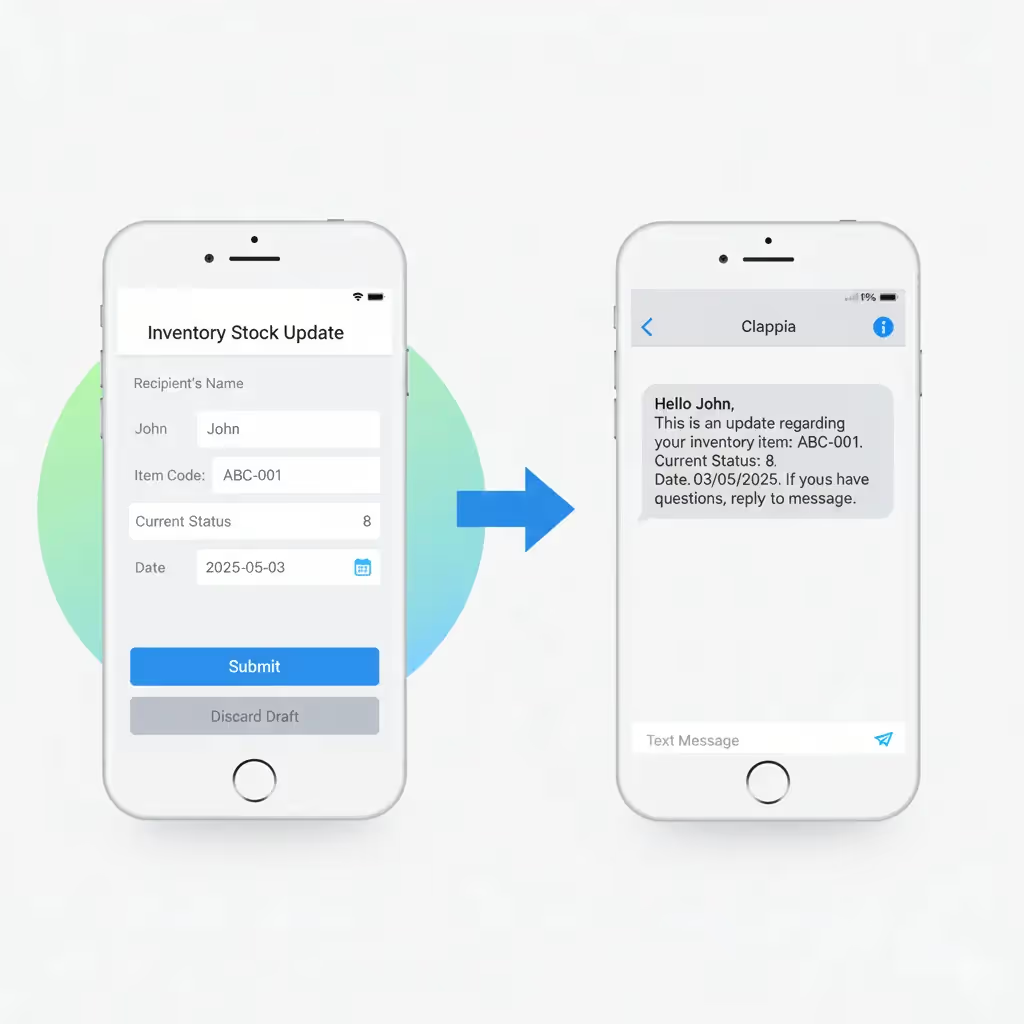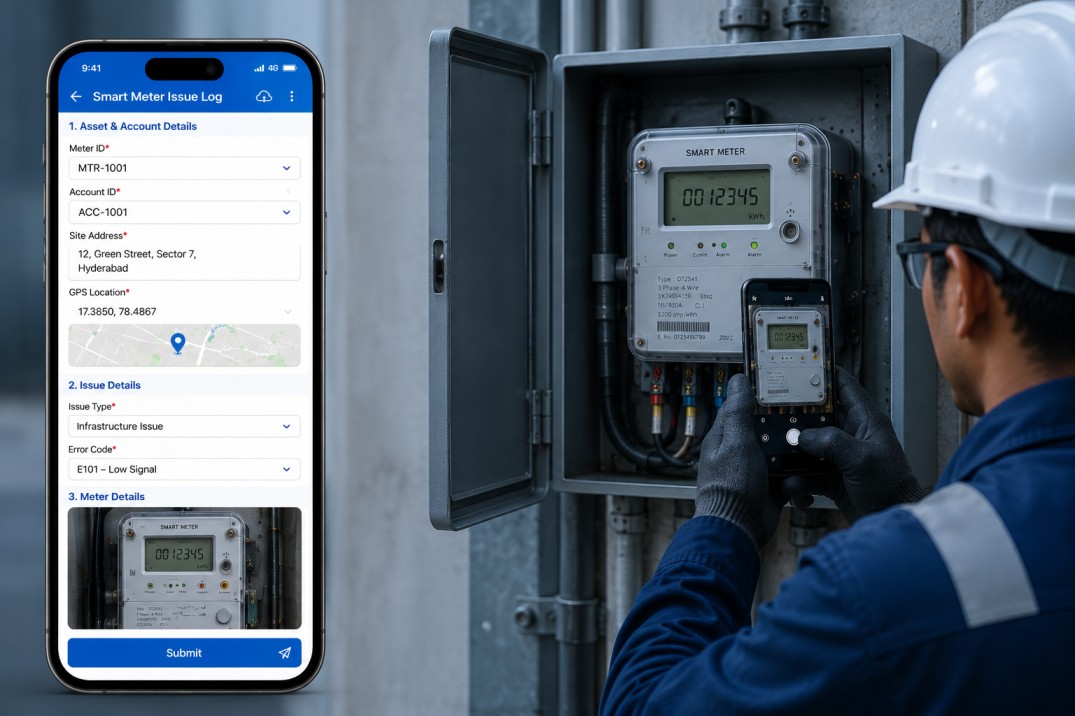

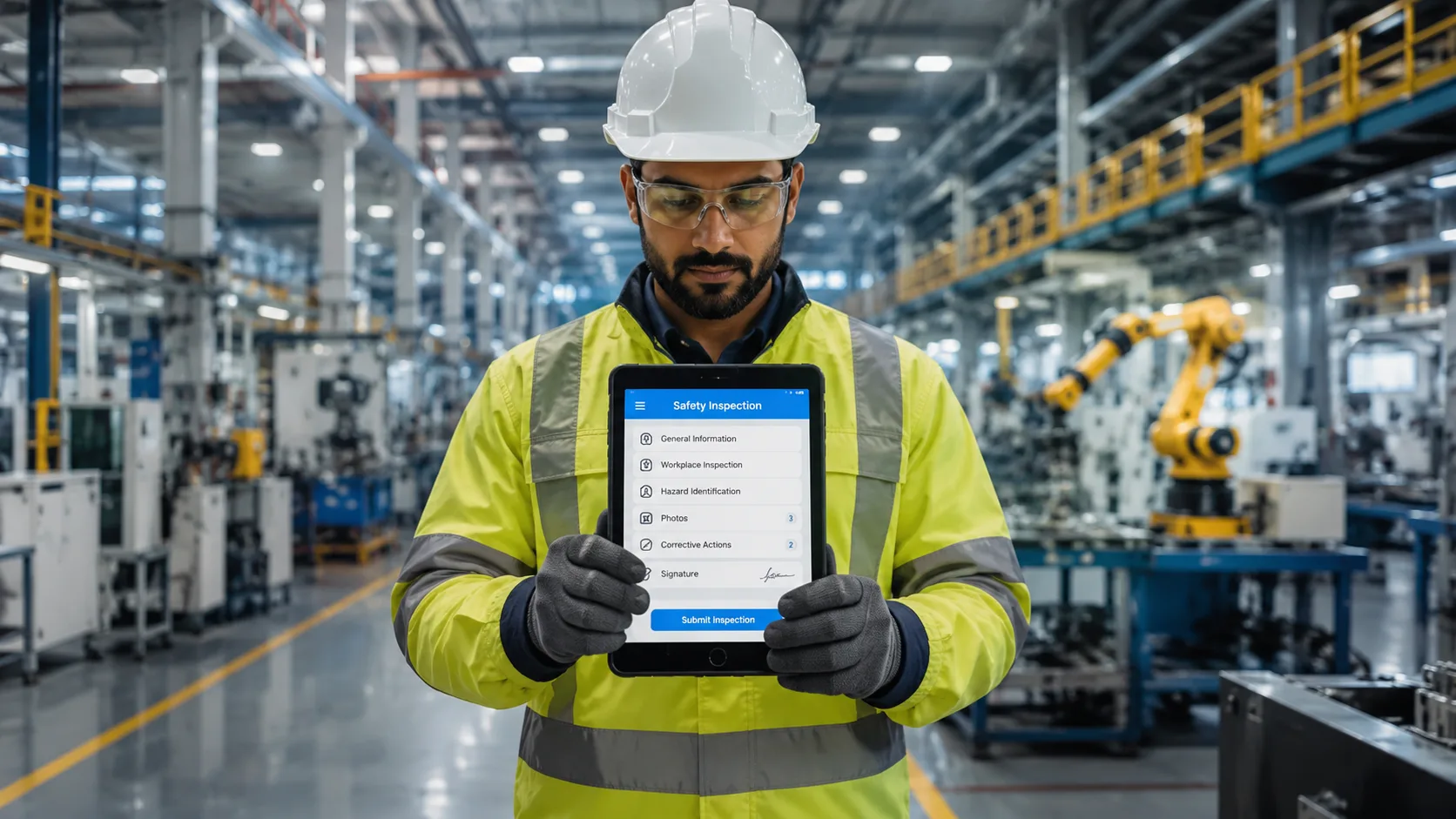
On a manufacturing floor, a missed safety check is not a paperwork problem - it is a shutdown, an injury, or a failed audit waiting to happen. Paper forms and generic spreadsheets slow inspectors down, lose photos, and leave supervisors chasing sign-offs long after the hazard was spotted. The right safety inspection app fixes that by moving every checklist, photo, and corrective action onto the phone already in your team's pocket.
The best safety inspection apps for manufacturing in 2026 are: Clappia, SafetyCulture, MaintainX, GoAudits, Intelex, SiteDocs, EASE, and Fulcrum. This is a buyer's guide, not a feature dump: below I compare all eight on what actually decides value on a plant floor - offline reliability, photo and GPS capture, corrective-action tracking, compliance depth, and price - and explain why a no-code builder like Clappia tops the list for teams that want the widest feature set at the lowest cost.
| App | Best for | Free plan? | Paid from | Key advantage for manufacturing |
|---|---|---|---|---|
| Clappia | No-code custom safety apps | Yes (free forever) | $6/user/mo | Build the exact inspection + workflow you need, no code |
| SafetyCulture | Template-driven inspections | Yes (up to 10 users) | ~$24/user/mo | Huge library of ready checklists |
| MaintainX | Maintenance + safety on mobile | Yes (2 users) | $16/user/mo | Ties inspections to work orders |
| GoAudits | Scored audits & PDF reports | No (14-day trial) | ~$10/user/mo | Automatic scoring and branded reports |
| Intelex | Enterprise EHS compliance | No (demo) | $49/user/mo | Deep regulatory + incident modules |
| SiteDocs | Frontline field safety docs | No (trial varies) | ~$25/mo | Simple worker-facing sign-offs |
| EASE | Layered process audits (LPA) | No (quote) | Quote | Purpose-built for plant-floor LPAs |
| Fulcrum | Geospatial field inspection | No (trial) | ~$43/user/mo | Map-based, GPS-heavy data capture |
Manufacturing safety is high-frequency and high-stakes. Machine guarding, lockout/tagout, chemical storage, PPE compliance, and near-miss reporting all have to be checked, logged, and acted on - often across multiple shifts and plants. When those checks live on paper or in disconnected spreadsheets, three things break: data arrives late, evidence goes missing, and nobody can prove compliance when an auditor shows up.
A purpose-built app closes those gaps. Inspectors capture findings offline in the noisy corners of the plant, attach time-stamped photos, and trigger a corrective action the moment a check fails. According to the U.S. Occupational Safety and Health Administration (OSHA), employers are expected to identify and correct hazards promptly - and a digital trail makes that far easier to demonstrate than a binder of signed sheets.
Digital inspections also feed the continuous-improvement loop that standards like ISO 45001 expect: every logged finding becomes a data point you can trend, escalate, and close out. Guidance from the National Institute for Occupational Safety and Health (NIOSH) underscores that timely hazard identification and correction are the foundation of an effective plant-safety program. That is the difference between checking a box and actually reducing risk.
The best app is not the one with the longest feature list on paper - it is the one that combines an affordable price with the widest set of features your floor will actually use. I weighed every tool on these buyer criteria:
Clappia is a no-code app builder that lets safety and operations teams build the exact inspection app their plant needs - without writing a line of code or waiting on IT. Instead of forcing your process into a fixed template, you drag and drop fields, checklists, photo inputs, and approval steps to match how your inspections actually run. That flexibility is why it works equally well for a factory inspection app, a quality inspection app, or an incident reporting app. Every submission is captured offline and synced automatically once a device is back online.
Where Clappia pulls ahead is the workflow engine sitting behind the forms. A failed machine-guard check can route instantly to a supervisor through a multi-level approval workflow, trigger an email or WhatsApp alert, and land on a live dashboard - no integrations or scripting required. It scales from a single line to plant-wide programs like a pipeline safety management system.
And because it is a true platform rather than a single-use tool, the same account can power field data collection, maintenance logs, and audits - so your safety app doesn't live on an island. You can explore the full feature set to see how far the builder goes.
Turn a paper safety checklist into a mobile app your plant floor can use today - complete with photo capture, GPS and instant approvals.
Get started freeWhere it beats the competition:
Pros:
Cons:
Pricing: Free plan available (free forever); paid plans start at $6/user/month.
G2 rating: 4.7/5
Best for: manufacturers that want the most features for the money - an inspection app shaped around their exact process, with room to grow into workflows, approvals, and dashboards without buying more tools.
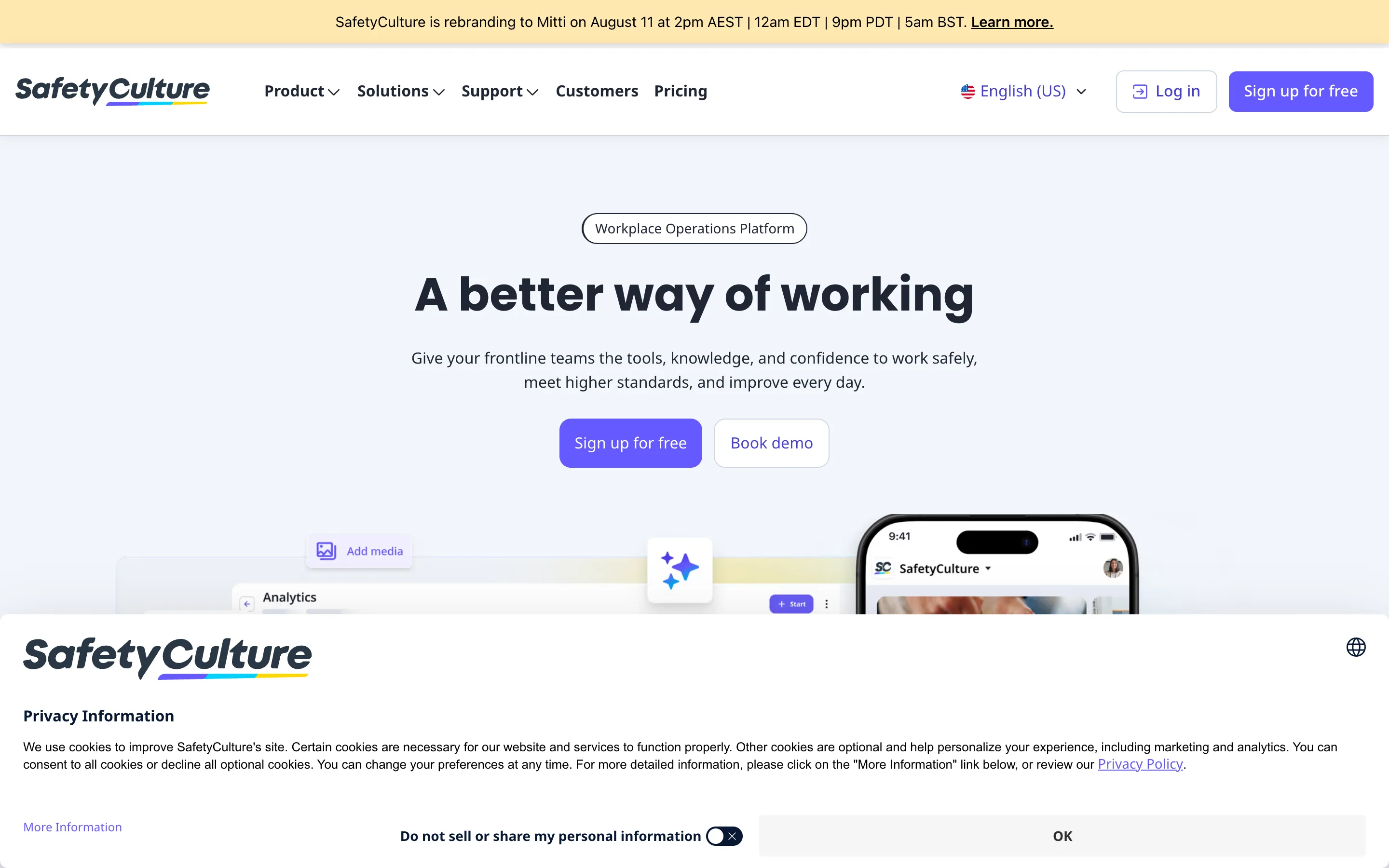
SafetyCulture (formerly iAuditor) is the most widely used mobile inspection platform, and its biggest draw is the enormous library of pre-built checklists covering everything from machine safety to housekeeping. For a team that wants to digitize inspections this week without designing forms from scratch, it is often the fastest starting point. Inspectors capture photos, add notes, and generate a shareable report as soon as a walk-through ends.
It also handles the basics well: offline capture, scheduled inspections, and analytics dashboards that surface recurring failures. The trade-off is depth of customization - you are working within its form model rather than building an arbitrary workflow.
Where it beats the competition:
Pros:
Cons:
Pricing: Free plan for up to 10 users; Premium from about $24/user/month (billed annually).
G2 rating: 4.7/5
Best for: teams that want proven templates and reporting more than custom workflows.
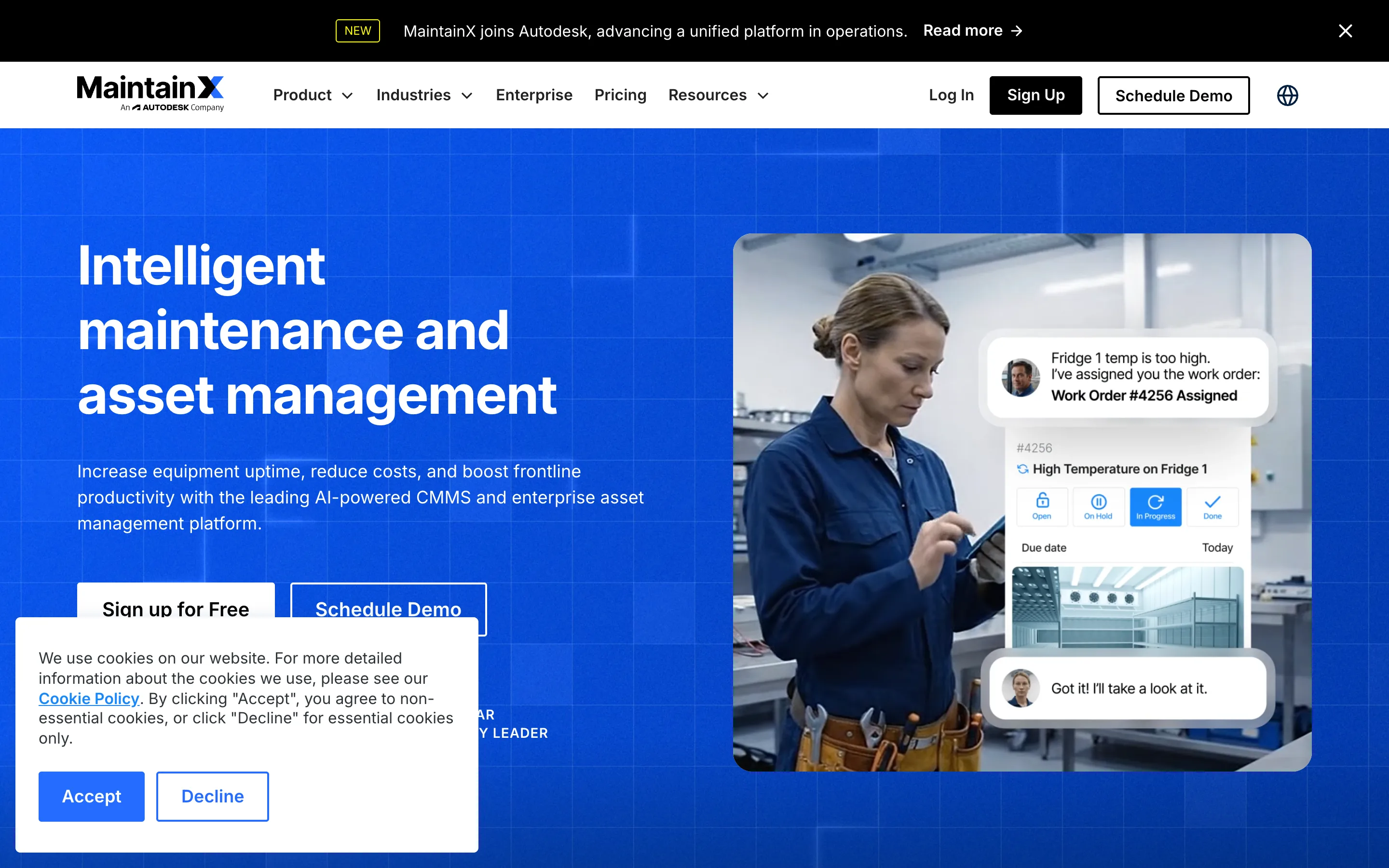
MaintainX started as a mobile CMMS, and that heritage shows: it is built to turn a problem you spot into a work order on the same screen. For maintenance-heavy plants where a safety issue and an equipment issue are often the same thing, that connection is genuinely useful. Procedures read like a chat, so frontline technicians pick it up fast.
As a pure inspection tool it is capable rather than deep, but the ability to link a failed check straight to a repair job and a parts request is a real advantage on the factory floor.
Where it beats the competition:
Pros:
Cons:
Pricing: Free plan (2 users); Essential from $16/user/month.
G2 rating: 4.8/5
Best for: maintenance teams that want inspections and work orders in one app.
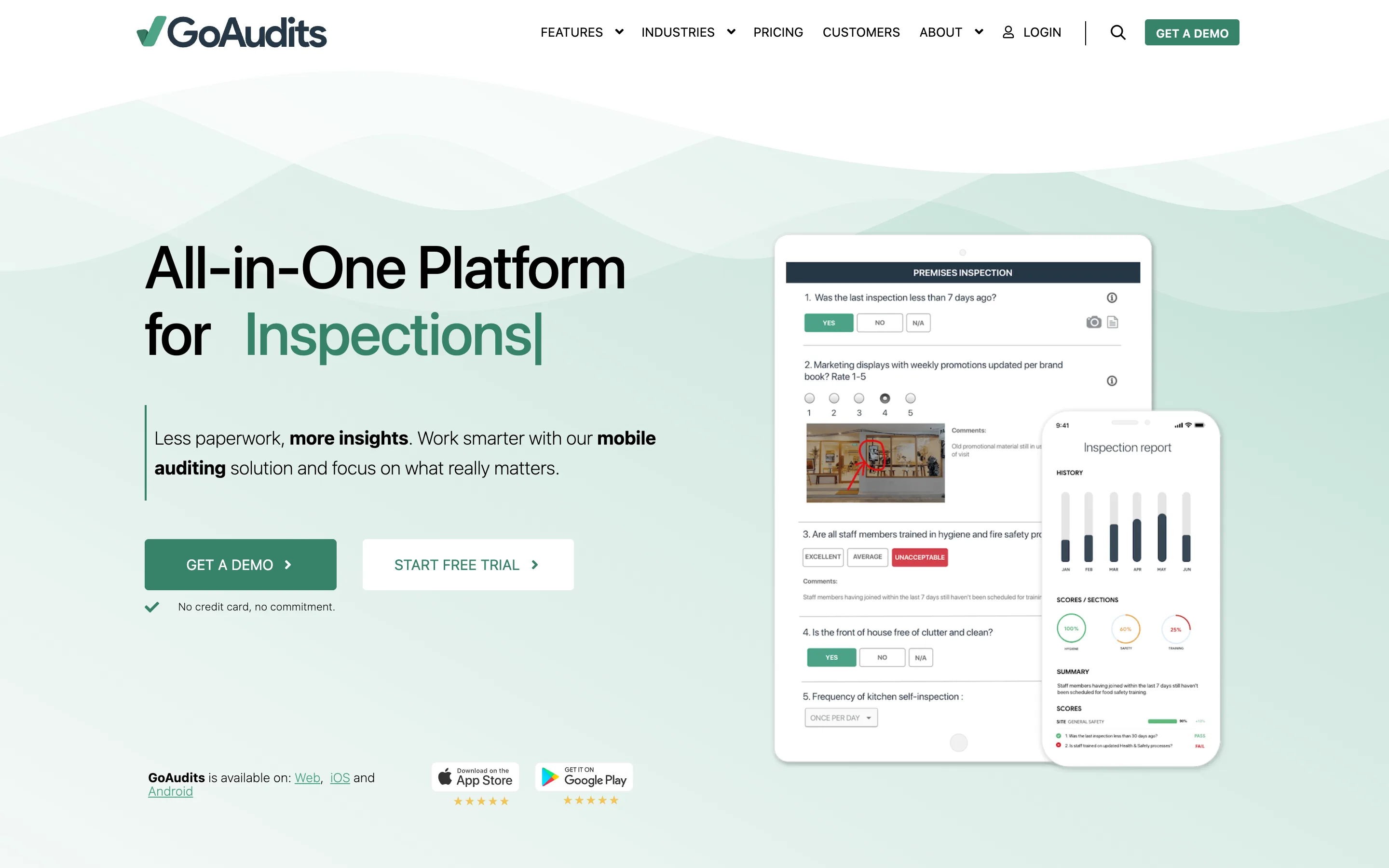
GoAudits focuses on the audit-and-report loop: run a scored inspection, and it produces a clean, branded PDF automatically, then tracks the corrective actions that follow. For manufacturers who report safety scores up the chain, that automatic scoring and reporting saves real time every week. Inspectors work offline and sync when they reconnect.
It is lighter on custom workflow than a platform tool, but for standardized, scored walk-throughs it is efficient and affordable.
Where it beats the competition:
Pros:
Cons:
Pricing: 14-day free trial (no free plan); paid plans from about $10/user/month.
G2 rating: 4.8/5 (Capterra)
Best for: teams that live on scored checklists and need clean reports fast.
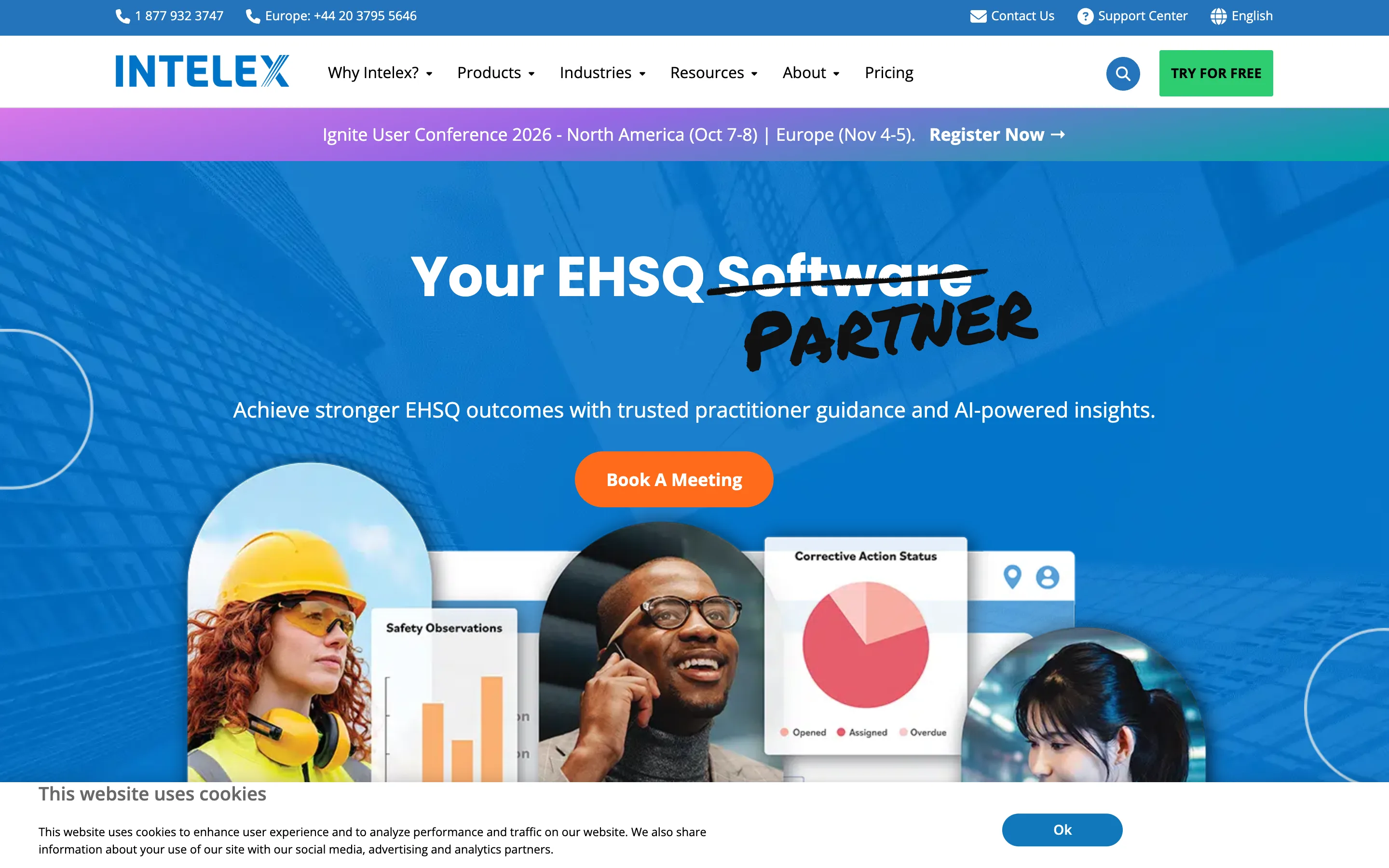
Intelex is an enterprise EHS suite rather than a lightweight app, and it is aimed at large manufacturers with dedicated safety staff and multi-site regulatory obligations. Inspections are one module inside a broader system covering incidents, risk registers, training, and audit trails mapped to standards like ISO 45001. If your compliance needs are heavy, that depth is the point.
The flip side is cost and complexity: Intelex is an IT-led deployment, not something a supervisor spins up over lunch.
Where it beats the competition:
Pros:
Cons:
Pricing: No free plan (demo only); Essentials from $49/user/month.
G2 rating: 4.0/5
Best for: large enterprises that need full EHS compliance, not just inspections.
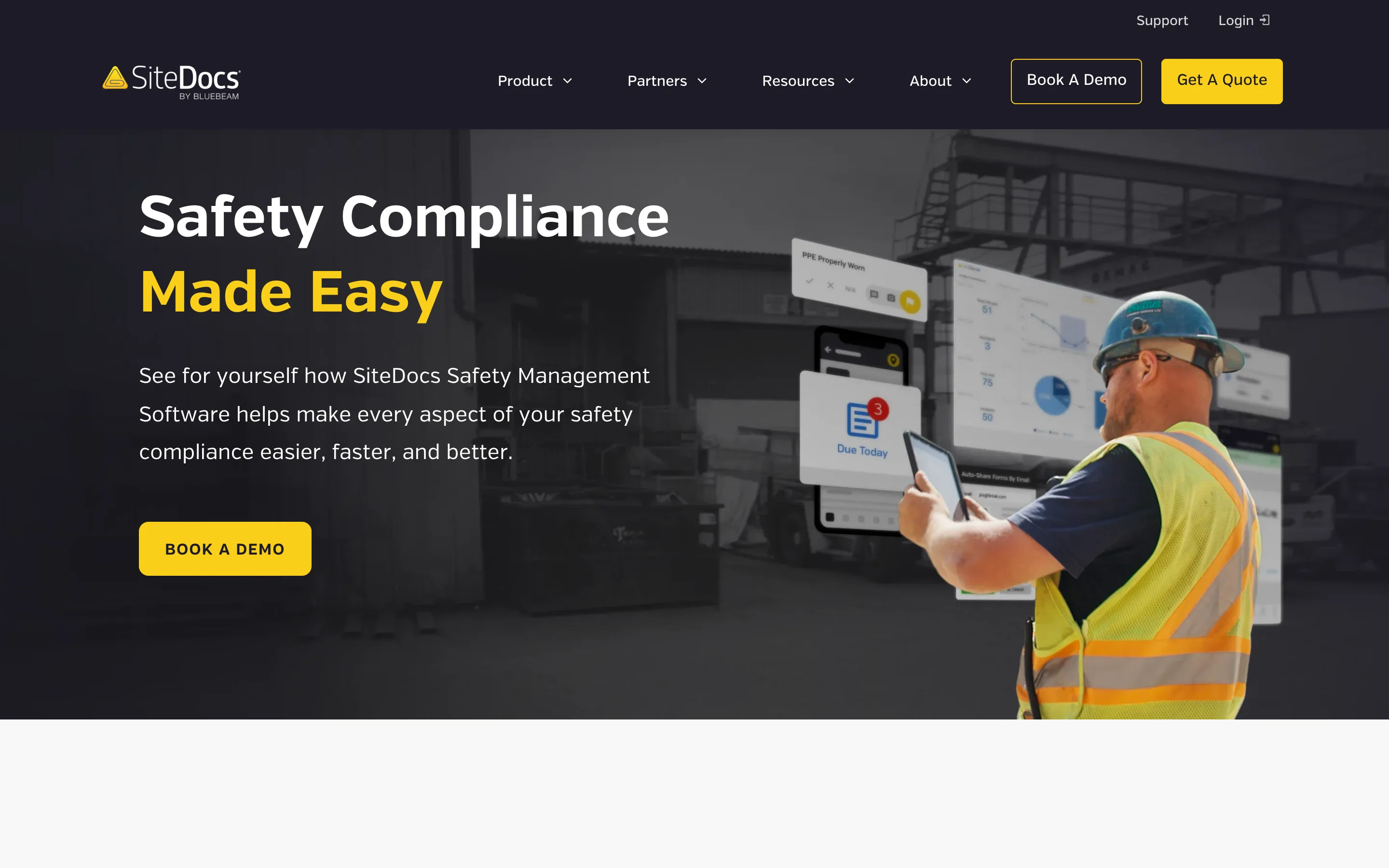
SiteDocs made its name in construction but works well in any field-heavy manufacturing setting where the priority is getting workers to complete and sign safety documents on their phones. It is deliberately simple: digital forms, certifications, and sign-offs that non-technical crews actually use. That simplicity drives high adoption on the floor.
It trades configurability for approachability, so complex workflows and analytics are not its strength.
Where it beats the competition:
Pros:
Cons:
Pricing: No free plan; company-size tiers from around $25/month (1 user).
G2 rating: 4.5/5
Best for: field crews that need dead-simple digital safety paperwork.
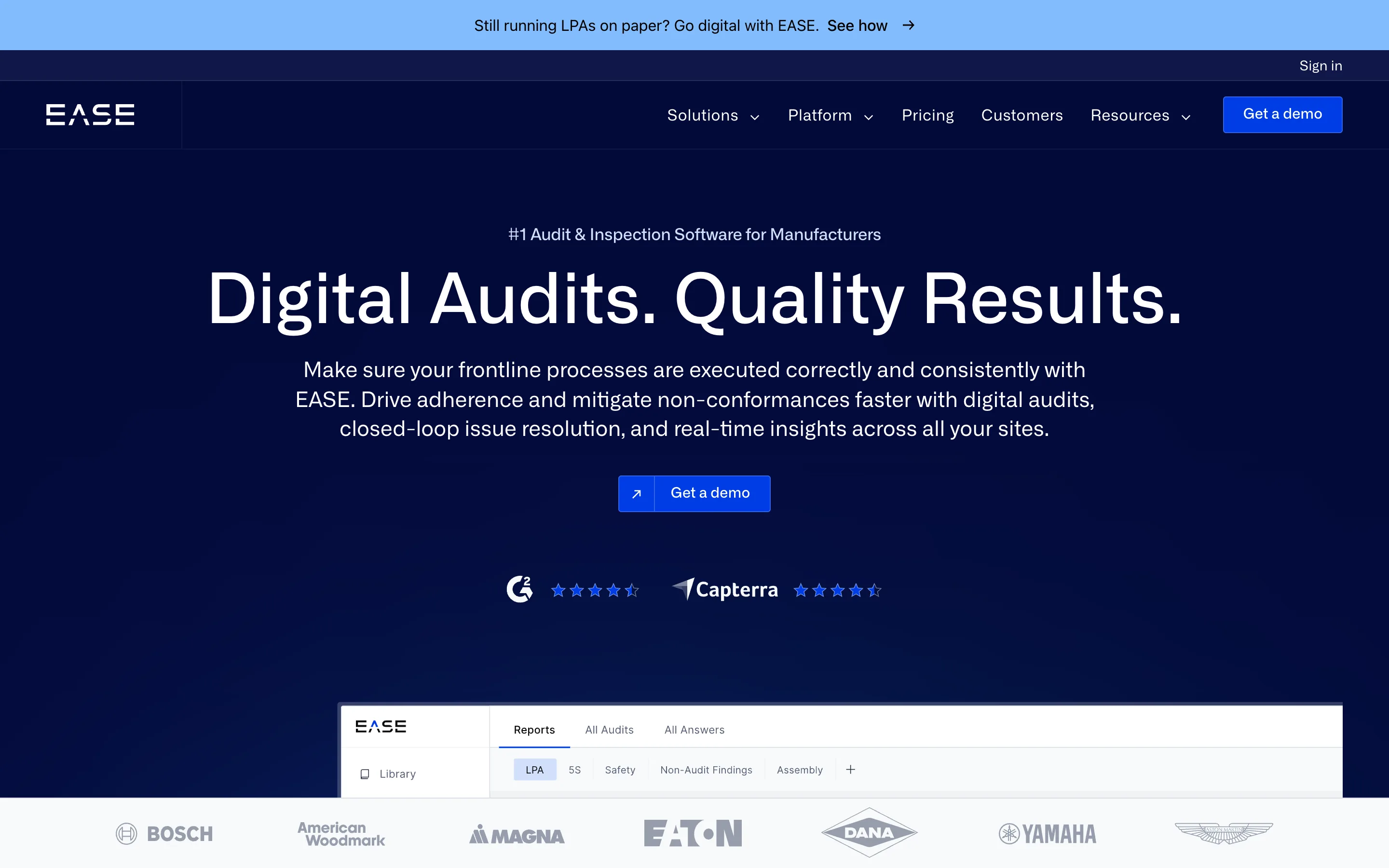
EASE is purpose-built for manufacturers running formal Layered Process Audits and quality programs tied to standards like IATF 16949. It schedules audits across layers of the organization, routes findings, and reports on completion - exactly the structure automotive and industrial suppliers need. If LPAs are central to your quality system, EASE is designed for that job specifically.
Because it is specialized, it is less useful as a general-purpose inspection app, and pricing is quote-only.
Where it beats the competition:
Pros:
Cons:
Pricing: Quote only (no public price, no free plan).
Rating: Well rated on Gartner Peer Insights (no public G2 listing)
Best for: plants whose quality system is built around layered process audits.
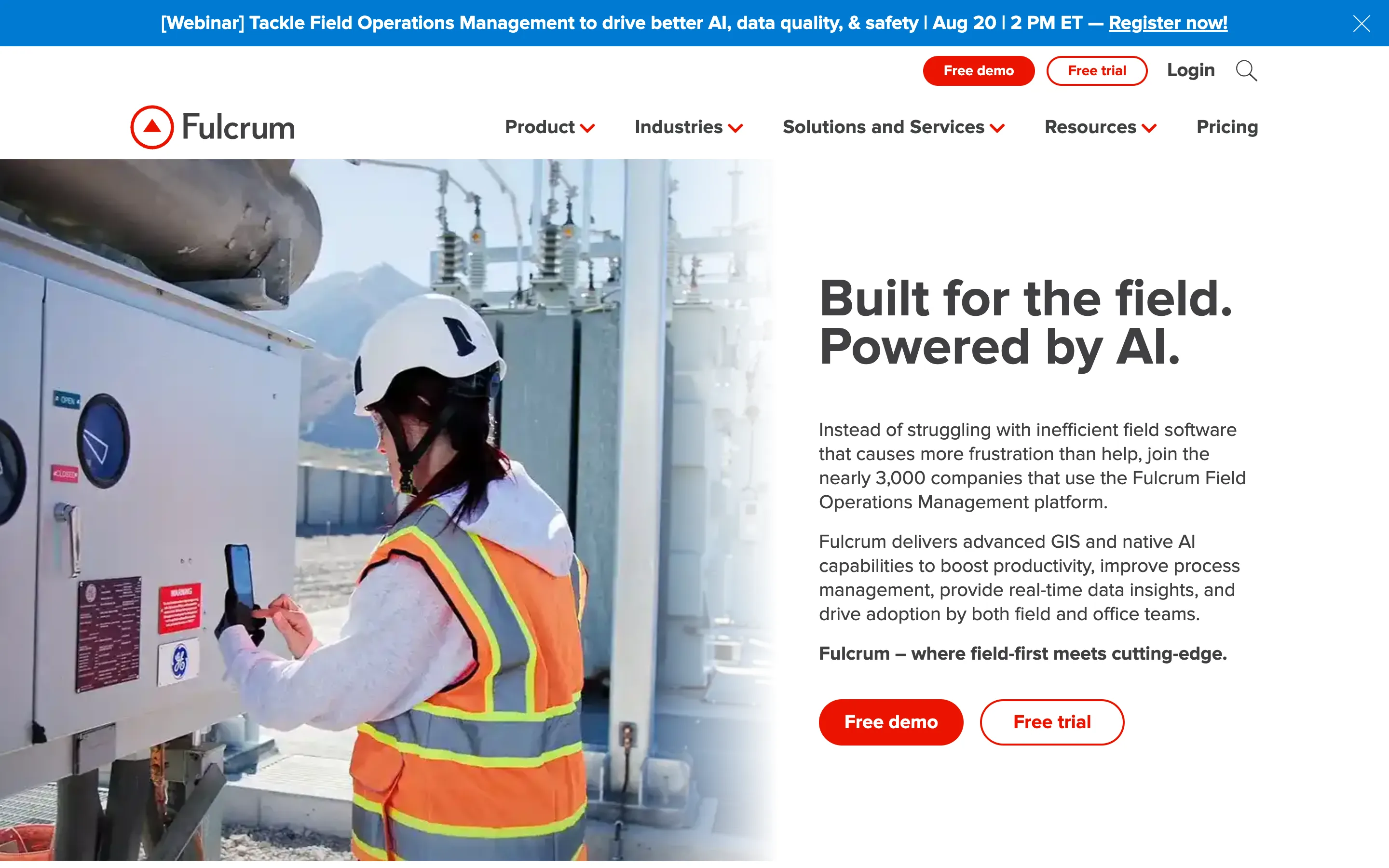
Fulcrum is a field-first data platform with unusually strong location capabilities, which makes it a fit for manufacturers with large sites, outdoor assets, or distributed infrastructure to inspect. Its map-based interface, GPS tagging, and GIS integrations let teams capture inspections tied precisely to where each asset sits. For spread-out operations, that geospatial angle is a genuine differentiator.
It leans toward data collection over safety-specific workflow, so corrective-action tracking is lighter than dedicated EHS tools.
Where it beats the competition:
Pros:
Cons:
Pricing: No free plan (trial only); from about $43/user/month (annual).
G2 rating: 4.6/5
Best for: operations that inspect assets spread across large or outdoor sites.
Rankings here are based on hands-on evaluation against a manufacturing use case: digitizing a daily machine-safety walk-through with photo evidence, offline capture, a supervisor approval step, and a trended dashboard. I weighed each tool on how faithfully it could reproduce that end-to-end flow, how quickly a non-technical safety lead could stand it up, and the real cost to run it for a 20-person team - including whether the "free" option was a true free plan or just a trial.
The best safety inspection app is not the one with the most templates - it is the one your floor team will actually open on every shift, and that turns a failed check into a tracked fix without anyone re-typing it into a spreadsheet.
There is no single right answer - the best fit depends on how standardized your inspections are and how much workflow sits behind them. Standardized checklists are well served by SafetyCulture or GoAudits; maintenance-linked plants lean toward MaintainX; large regulated enterprises need Intelex or EASE; and geographically spread-out sites benefit from Fulcrum. But if you want the most features for the money - one app that fits your exact process today and grows into approvals, dashboards, and other operations apps tomorrow - a no-code platform is the safer long-term bet.
SafetyCulture wins on templates, MaintainX on maintenance, and Intelex on enterprise compliance - each is excellent in its lane. But for the widest range of manufacturers, Clappia is the strongest overall choice on value: it captures inspections offline with photos and GPS, routes failed checks through real approval workflows, and lets a safety lead build all of it without code - starting on a free plan and scaling from just $6/user/month. You get the flexibility of a custom system without the cost or timeline of building one.
If your team is still running safety inspections on paper or scattered spreadsheets, the fastest way to see the difference is to rebuild one checklist as an app and run it on your next shift. You can start building for free and have a working manufacturing safety inspection app - complete with photo capture, GPS, and approvals - live the same day.
 Get Started – It’s Free
L374, 1st Floor, 5th Main Rd, Sector 6, HSR Layout, Bengaluru, Karnataka 560102, India
3500 S DuPont Hwy, Dover,
Kent 19901, Delaware, USA


.svg)



3500 S DuPont Hwy, Dover,
Kent 19901, Delaware, USA
L374, 1st Floor, 5th Main Rd, Sector 6, HSR Layout, Bengaluru, Karnataka 560102, India