

Still need help?

This article explains the features of the Audio block and how it can be used to collect audio recordings within your app.

Click on the Audio block and start editing on the panel that appears on the right side.


The label is the name of the block that the end user sees in the app.
Example: Voice Feedback, Record Response.
The description is the additional information provided to the end user, displayed below the record button. You can also leave this blank if not necessary.
Example: Click to record your response. Recording will stop automatically once the limit is reached.
This option sets the maximum duration for audio recordings. Users can select a time limit from 15 seconds to 300 seconds. Once the specified time limit is reached during recording, the block will automatically stop recording and upload the audio file.
Example: Set to 60 seconds if you want to allow a 1-minute recording.
Enable this option if you want to make this field mandatory. When enabled, users must record an audio clip to complete the submission.

Set the maximum number of audio files that a user can record and submit. The default limit is 10 files, but this can be adjusted based on the app’s requirements.
Define a prefix for the recorded audio file names for easy identification. You can also set the prefix dynamically using values submitted by users by pulling field variables. To do this, type @ followed by the field name to use its value as the prefix for each recording.
Example: Setting a prefix as “Interview_Response” will label each recording file with this prefix.
Use this option to show or hide the field under specific conditions. It accepts the standard Clappia formulae, similar to conditional sections or in the ‘Calculations & Logic’ block.


This option appears once a condition is set in the Display this field if option. Enable this setting if you want the field's value to be retained even when the field is hidden. This is useful for preserving user input in cases where the field may temporarily disappear based on conditions.

Example: If the field is hidden based on user selection but you still need to keep the entered value for future reference or calculations, enable this option to ensure the data is retained.
This option is enabled by default. When active, end users can re-record audio after creating a submission. Disable this option if you want to prevent users from altering the recorded audio once it is submitted.

The Advanced Label option allows you to change the label of a field dynamically based on a condition you define. Instead of always showing the same fixed label under the ‘Basic’ tab, the field can display different labels depending on requirements of the form. Use spreadsheet-like functions such as IF, AND, OR, etc. and make use of other field variables to set your conditions. Type @ and select the field.
This is useful when the meaning of a field changes based on context, business logic, or user choices.
For example:
If you have a dropdown called Record Type with options “Customer Feedback” and “Supervisor Notes”.
Label should reflect what audio is being recorded.
So:
– If Customer Feedback, show “Record Customer Feedback”
– If Supervisor Notes, show “Record Supervisor Notes”
Formula:
This allows the same field to adapt its displayed purpose without needing multiple separate fields.
The Advanced Description option works exactly like Advanced Label, but it changes the description text instead. This is useful when guidance or instructions for a field need to change depending on earlier answers.
For example, if you have a dropdown called Report Type with options like “Short Report” and “Detailed Report”, you may want the description of your Audio Recording field to guide the user differently depending on what they selected.
So:
– If the user selects Short Report, the description could say: “Record a short audio summary (30–60 seconds).”
– If the user selects Detailed Report, the description could say: “Record a detailed audio narration covering observations and actions.”
Formula:
This helps users understand what is required from them without showing unnecessarily long or irrelevant instructions.
Additional Examples (Apply to Both Advanced Label and Advanced Description)
1. Showing nothing until a selection is made
For example, if you have a dropdown field called Visit Category with options “Routine” and “Urgent”, you may want the label or description of a field to remain blank until the user first selects a category.
Once a selection is made:
Formula (can be used in either Advanced Label or Advanced Description):
The label/description stays empty until the dropdown has a selected value.
After the user picks an option, the selected text (Routine or Urgent) becomes the label or description.
2. Changing label/description based on language selection
For example, if your form includes a dropdown field called Select Language with options English, Spanish, and French, you can show the label or description in the selected language.
So:
Formula (can be used in either Advanced Label or Advanced Description):
The formula returns the text for the selected language.
Only one label/description is shown at a time, depending on what the user picks in the Select Language dropdown.
1. Variables do not change
When a field is created, its variable name is derived from the label you set in the Basic tab. That variable name is what you must use in formulas, workflows, and other logic. The visible label or description shown by Advanced Label / Advanced Description does not change the variable name.
2. Submissions tab: table view vs right panel
In the Submissions area, the table view always displays the labels from the Basic tab. When you open an individual submission, the right panel shows the labels and descriptions as they appear in the form (i.e., the Advanced Label and Advanced Description applied for that submission). This keeps the submission list consistent while letting reviewers see the context-aware labels and descriptions when viewing a record.
3. Bulk Edit shows Basic tab labels and descriptions
When you need to Bulk Edit submissions, the spreadsheet you download shows the labels and descriptions from the Basic tab only. Advanced Label and Advanced Description are not applied in Bulk Edit, so keep that in mind when preparing bulk updates.
4. Some fields cannot be used inside Advanced Label/Description formulas
Certain block types do not expose a variable that can be referenced in Advanced Label or Advanced Description. If a block does not expose a variable, you cannot use it inside the formula.
Desktop View: Set the width of the PDF Viewer block in the desktop view. Options are 100%, 75%, 50%, or 25%.
Mobile View: Set the width of the PDF Viewer block in the mobile view. Options are 100% or 50%.
In the app's live version, users can record audio by clicking the record button within the Audio block. In the mobile app, users can still record, upload and submit audio files in offline mode. Once the internet connection is back, the submission will be automatically synced in the background.


Note that users cannot upload audio files directly in this block; they can only record. If they need to upload existing audio files, they should use the Camera, Images & Files block.
Once recording begins, if users exceed the set time limit, the app will automatically stop and save the recording once the maximum configured duration is reached and the audio will be uploaded immediately.
Users with appropriate permissions (such as app admins or users with edit access) can manage audio files for already submitted entries through the Submissions tab.
To modify an audio entry, go to the Submissions tab, locate the specific submission, and click on it. A right panel will appear where the audio files associated with the submission can be managed.


Admins and users with appropriate permissions can download audio recordings from submissions using the Submissions tab:
Go to App Home > Submissions tab and select the submission that contains the audio you want to download.
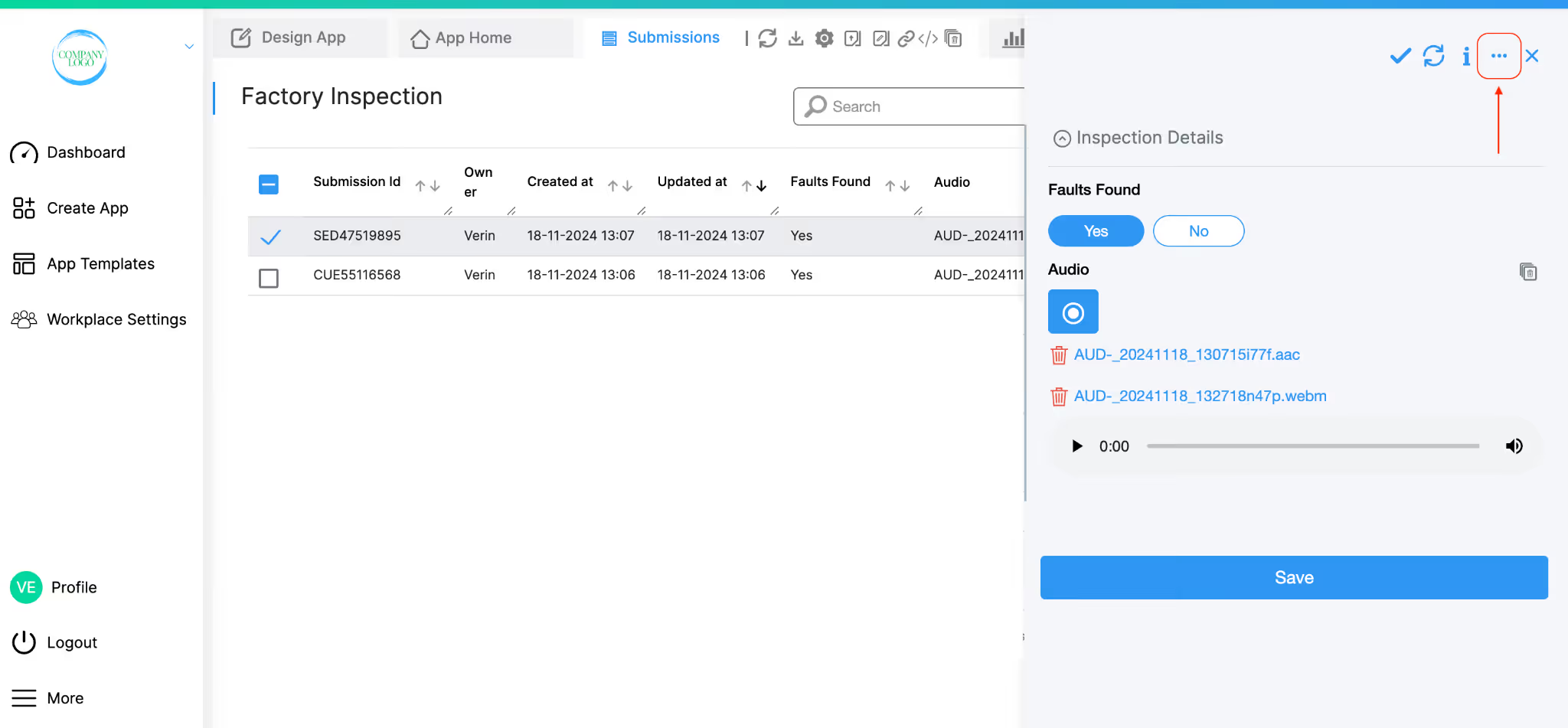
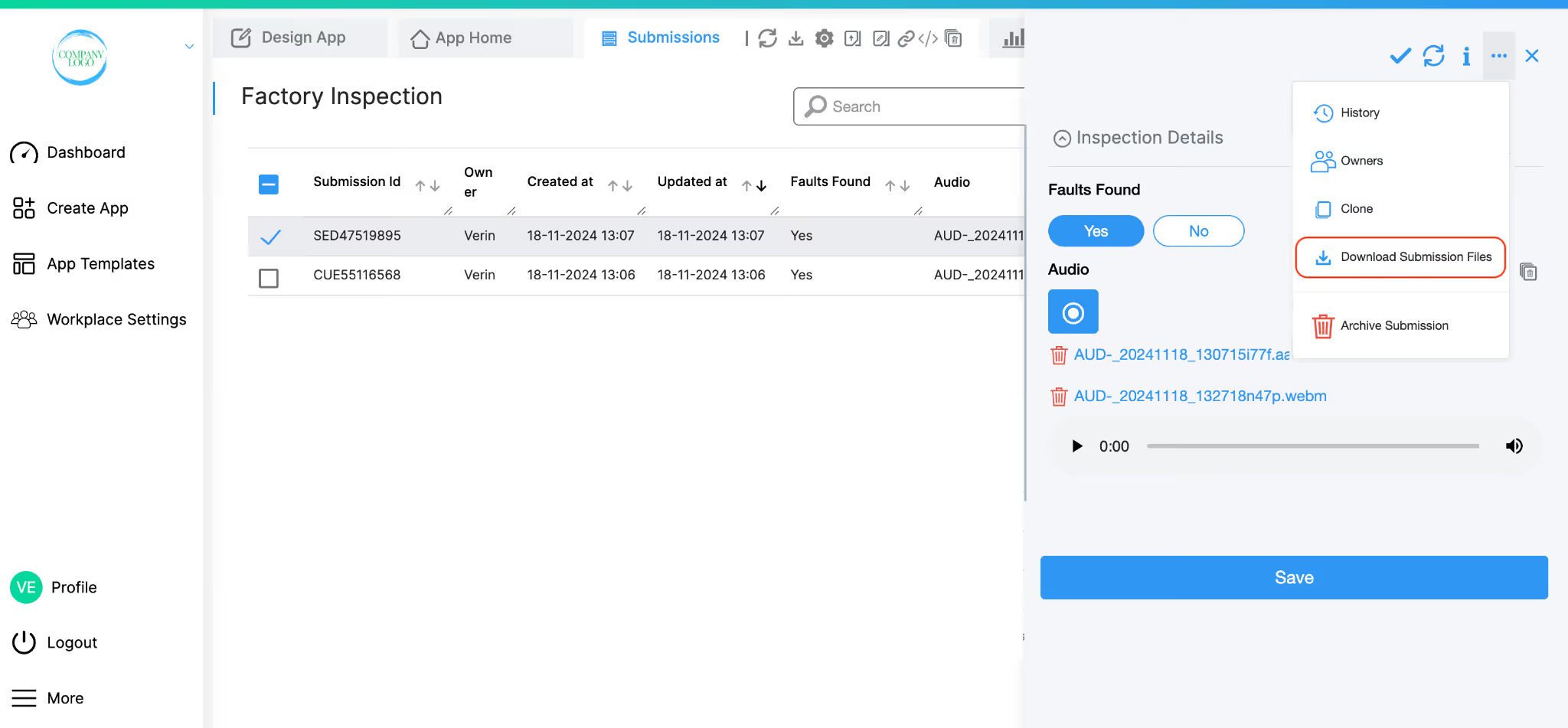
If only one submission is selected, click the three dots icon in the right panel and choose Download Submission Files. This downloads all files, including audio, associated with that submission.
To download audio from multiple submissions, select the checkboxes next to each submission. A right panel will appear, click the Download icon at the top and choose Download Files. The downloaded file package will include audio recordings from all selected submissions.
L374, 1st Floor, 5th Main Rd, Sector 6, HSR Layout, Bengaluru, Karnataka 560102, India
3500 S DuPont Hwy, Dover,
Kent 19901, Delaware, USA


.svg)




3500 S DuPont Hwy, Dover,
Kent 19901, Delaware, USA
L374, 1st Floor, 5th Main Rd, Sector 6, HSR Layout, Bengaluru, Karnataka 560102, India