


Manufacturing downtime costs $50 billion annually. Equipment failures, missed maintenance schedules, and reactive repairs drain profits while production lines sit idle. Your competitors are cutting maintenance costs by 30% and extending equipment life by 40% using scheduled maintenance software that actually fits manufacturing workflows.
Traditional CMMS platforms force you into rigid templates, require months of implementation, and lock critical maintenance data in desktop systems your technicians can't access on the shop floor. Build your custom maintenance system in days, not months—tailored precisely to your manufacturing equipment, processes, and compliance requirements.
Stop losing production hours to preventable equipment failures. Schedule preventive maintenance based on equipment runtime, production cycles, or calendar intervals—automatically triggering work orders before breakdowns occur.
Configure schedules for CNC machines requiring monthly calibration, conveyor systems needing weekly lubrication, hydraulic presses requiring quarterly inspections, and packaging equipment demanding daily checks. The system calculates next maintenance dates, sends escalating reminders for overdue tasks, and prevents equipment operation past critical windows.
Clappia's factory inspection applications adapt to your specific manufacturing environment—heavy machinery, precision equipment, food processing lines, or pharmaceutical systems.
Transform paper checklists and verbal inspections into intelligent digital workflows. AI analyzes equipment photos during inspections, identifies anomalies like unusual wear patterns, oil leaks, or component damage, generates instant alerts for critical issues requiring immediate attention, and recommends specific corrective actions based on similar past incidents.
Maintenance technicians capture equipment conditions with photo documentation showing before-and-after repairs, QR code scanning for instant equipment identification and history access, audio notes describing unusual sounds or vibrations, GPS location verification confirming on-site inspections, and digital signatures from supervisors approving completed work.
Quality inspection capabilities extend beyond basic checklists—AI detects subtle equipment degradation invisible to human inspectors, predicts component failures weeks before breakdown, compares current equipment condition against historical baselines, and prioritizes maintenance based on failure risk and production impact.
What competitors don't offer: Most CMMS platforms provide static checklists without AI analysis. They can't identify developing problems from photos, lack predictive failure warnings, and don't automatically adjust maintenance priorities based on real equipment condition data.
Your technicians work on the manufacturing floor—not at desks. Mobile maintenance applications work on smartphones and tablets, function in noisy industrial environments, and deliver real-time updates without office returns.
Access maintenance information offline when working in facilities with poor connectivity, basement equipment rooms, or metal-enclosed production areas. Technicians scan equipment QR codes to instantly view maintenance history, pending work orders, spare parts location, and repair procedures—all without internet connection.
Offline capabilities prove critical where WiFi struggles, cellular signals fail inside buildings, and technicians move across large facilities. Continue capturing inspection data, completing work orders, and recording parts usage regardless of connectivity.
Competitor Gap: Most CMMS vendors require constant internet connection. When connectivity drops, technicians lose access to equipment data, cannot complete work orders, and must manually track maintenance for later entry.
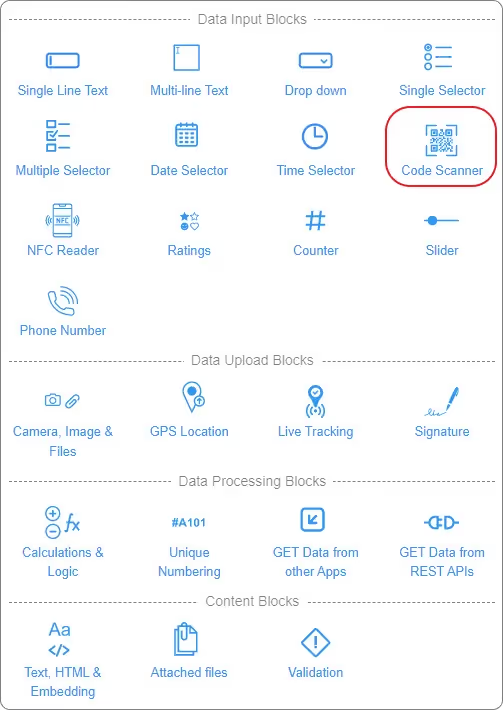
Scan equipment QR codes with smartphones for instant access to complete asset histories, pending schedules, parts inventories, and repair procedures. Every scan automatically logs technician identity, timestamp, and location—creating audit trails without manual documentation.
Track equipment movement across production lines, monitor usage hours triggering condition-based maintenance, and identify underperforming assets. The system maintains calibration schedules, tracks tool checkout/return, and prevents unauthorized equipment use.
Competitor Gap: Traditional CMMS platforms require manual equipment lookup through complex menus. They lack native QR functionality, can't track movement automatically, and don't maintain location history.
Stop chasing approvals, parts orders, and technician assignments through email chains and phone calls. Approval workflows automatically route maintenance requests through proper channels—equipment operators submit maintenance requests with photos and descriptions, supervisors review and prioritize based on production impact, maintenance managers assign qualified technicians, parts departments pull required inventory, and quality assurance approves work before equipment returns to production.
Multi-level approvals ensure critical maintenance receives proper oversight while routine tasks move quickly. High-value repairs requiring engineering review automatically escalate to technical specialists. Emergency maintenance bypasses normal approval workflows, immediately notifying on-call personnel. Completed work triggers automatic notification to production scheduling for equipment availability.
Email notifications, mobile push alerts, and WhatsApp messages keep stakeholders informed without manual communication. Production managers receive advance notice of scheduled downtime. Purchasing departments get automated alerts for spare parts replenishment. Executives access real-time dashboards showing maintenance metrics and equipment availability.
What competitors don't offer: Most CMMS solutions provide basic email notifications but lack integrated approval workflows. They can't automatically route requests based on equipment criticality, don't support WhatsApp communication preferred by many technicians, and require manual coordination between maintenance, production, and purchasing departments.
Analytics dashboards transform maintenance data into actionable insights. Bar graphs compare costs across production lines. Pie charts break down spending between preventive maintenance, repairs, parts, and labor.
Identify which equipment consumes excessive maintenance resources, which technicians complete work most efficiently, and which strategies deliver best reliability improvements. Calculate total cost of ownership for data-driven equipment investment decisions.
Automated reporting delivers scheduled summaries—daily completion reports, weekly equipment availability dashboards, monthly cost analysis, and quarterly compliance documentation.
Competitor Gap: Standard CMMS platforms provide generic reports requiring manual Excel manipulation. They lack manufacturing-specific metrics like OEE and don't calculate true downtime costs including lost production value.
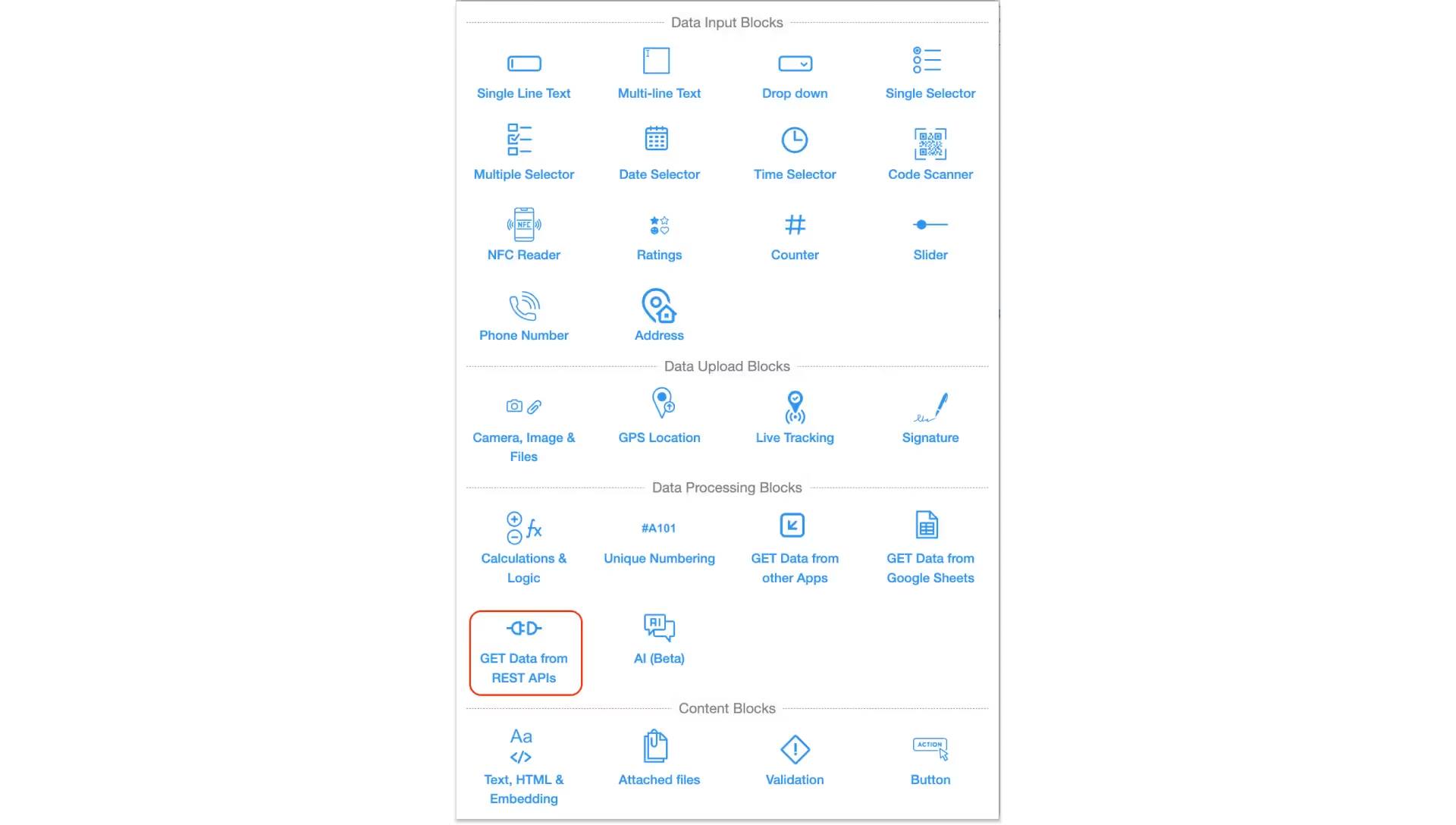
REST API integration enables bidirectional data flow—work orders create purchase requisitions, completed maintenance updates equipment status, parts usage deducts from inventory, and quality holds prevent equipment operation until maintenance completion.
Database connectivity provides direct access to MySQL, PostgreSQL, SQL Server, and enterprise databases. Google Sheets integration offers simple reporting for organizations preferring spreadsheet workflows.
Competitor Gap: Many CMMS vendors charge thousands extra for API access, limit integration to specific platforms, and require expensive middleware for database connectivity.
CNC Machine Shop reduced downtime 60% tracking spindle hours and automatically scheduling tool changes. Food Processing Facility achieved 100% sanitation audit compliance using mobile inspection checklists with photo requirements. Automotive Parts Manufacturer cut maintenance costs 35% using predictive analytics identifying failing components weeks early. Pharmaceutical Production maintains FDA compliance through comprehensive audit trails and digital signatures on calibration records.
Stop Losing Production to Preventable Equipment Failures
Build custom scheduled maintenance software matching your exact manufacturing workflows, equipment types, and compliance requirements—deployed in days, not months.



L374, 1st Floor, 5th Main Rd, Sector 6, HSR Layout, Bengaluru, Karnataka 560102, India
3500 S DuPont Hwy, Dover,
Kent 19901, Delaware, USA


.svg)




3500 S DuPont Hwy, Dover,
Kent 19901, Delaware, USA
L374, 1st Floor, 5th Main Rd, Sector 6, HSR Layout, Bengaluru, Karnataka 560102, India
