

Geofencing technology has transformed fleet management by creating virtual boundaries around geographic locations. When vehicles enter or exit these designated zones, fleet managers receive automatic notifications enabling proactive oversight without constant manual monitoring. This location-based tracking capability improves operational efficiency, enhances security, ensures compliance, and reduces costs across transportation, delivery, and field service operations.
Clappia's no-code platform enables businesses to build custom geofencing applications tailored to specific fleet operations. Companies create mobile apps with GPS location capture, automated zone-based alerts, and comprehensive tracking reports within hours without programming expertise or expensive development costs.
Geofencing creates virtual perimeters around specific geographic areas using GPS coordinates. Fleet management systems monitor when vehicles equipped with GPS tracking devices cross these boundaries, triggering predefined actions like notifications, data logging, or automated workflows. Organizations define geofences around customer sites, service territories, warehouse locations, restricted zones, or any geographic area requiring monitoring.
The technology relies on GPS satellite positioning combined with mobile connectivity to track vehicle locations continuously. When a vehicle's GPS coordinates enter or exit a geofenced area, the system detects the boundary crossing and executes configured responses. Fleet managers establish circular geofences with defined radius measurements or polygon-shaped zones following irregular boundaries like property lines or service territories.
Geofencing applications extend beyond simple location monitoring. Organizations use geographic boundaries to automate time tracking for service calls, verify customer visit completion, prevent unauthorized vehicle usage, enforce route compliance, and trigger maintenance reminders when vehicles return to depot locations. This automation eliminates manual tracking tasks while providing accurate, timestamped location verification.

GPS location blocks capture precise coordinates when field personnel submit forms or check in at locations. Systems compare these coordinates against defined geofence boundaries to determine if the submission occurred inside or outside designated zones. Organizations configure geofences by specifying center points with radius measurements or by drawing custom boundaries on maps.
When vehicles enter geofenced areas, applications automatically record entry timestamps, capture exact GPS coordinates, log driver information, and trigger notification workflows. Exit detection works identically, documenting when vehicles leave zones and calculating total time spent within boundaries. This automatic logging eliminates reliance on manual reporting while creating verifiable location records for billing, compliance, or performance analysis.
Mobile applications with offline functionality continue tracking location data even without cellular connectivity. When devices regain network access, accumulated location data synchronizes automatically, ensuring complete tracking records regardless of coverage limitations in remote service areas or rural delivery routes.
Geofencing eliminates manual clock-in/clock-out processes. When drivers enter job site geofences, systems automatically record arrival times and calculate duration on site. This automated tracking supports accurate payroll processing, verifies service completion for billing, and provides documented proof of customer visits. The technology removes disputes about arrival times by providing GPS-verified timestamps.
Vehicle geofences around authorized areas trigger alerts when assets leave designated zones outside normal hours. Fleet managers receive immediate notifications of potential theft or unauthorized usage. Construction companies create geofences around project sites to monitor equipment movement, preventing theft and unauthorized transfers.
Geofencing verifies drivers follow assigned routes and visit scheduled locations. Systems compare actual movements against expected geofence sequences, identifying route deviations or missed stops. Customer notification systems send automatic arrival alerts when delivery vehicles enter neighborhood geofences, providing accurate arrival windows.
Geofencing creates automatic compliance records with GPS-verified timestamps proving vehicles operated in authorized areas and personnel visited required locations. Healthcare providers document home visit completion with geofence verification required for Medicare billing. Transportation companies prove drivers adhered to hazardous material routing restrictions.
Automated geofencing eliminates manual time tracking and route verification. Fleet managers spend less time investigating timesheet discrepancies or verifying customer visits. Organizations using geofencing report 10-15% fuel expense reductions through better route adherence and reduced unauthorized vehicle usage.
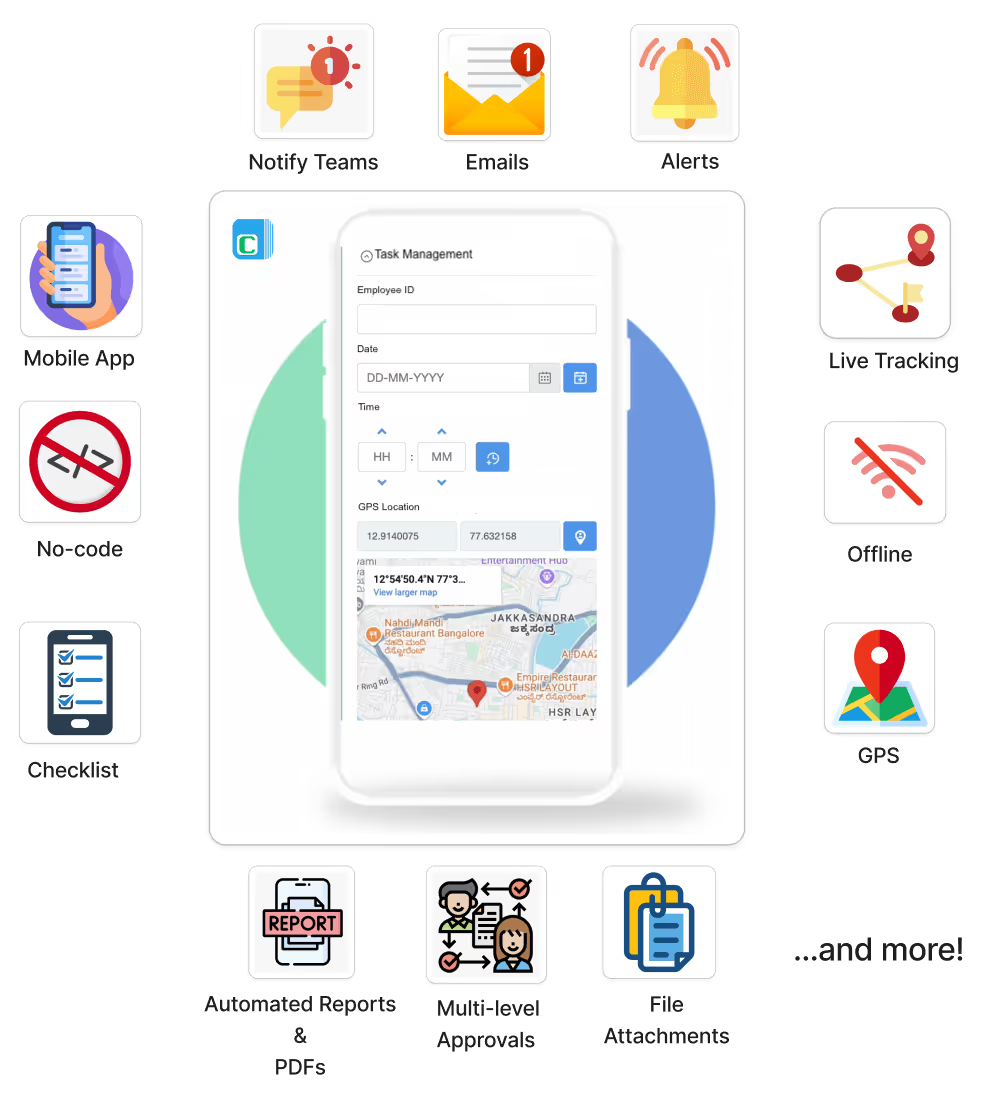
Clappia enables businesses to create customized geofencing applications without programming. Organizations design apps matching specific operational workflows rather than adapting to generic software.
GPS Location Capture: Automatic coordinate capture provides precise location verification. Geofencing configuration restricts submissions to designated areas, validating GPS coordinates against boundaries before accepting submissions.
Automated Zone Detection: Applications determine whether location falls inside or outside configured geofences automatically, providing immediate feedback if users attempt submissions outside authorized zones.
Timestamp Logging: Every geofence entry and exit receives automatic timestamp recording with GPS coordinates, creating audit trails for payroll, billing, and compliance documentation.
Photo Documentation: Camera capabilities combined with GPS create timestamped, location-verified photo evidence automatically tagged with coordinates and geofence status.
Offline Functionality: Mobile apps continue collecting GPS data and detecting geofence boundaries without cellular connectivity. Data synchronizes automatically when network access resumes.
Automated Notifications: Workflow automation triggers email alerts, SMS messages, or WhatsApp notifications based on geofence events configured for specific business rules.
Delivery Verification: Drivers scan packages or collect signatures only when GPS confirms they're inside correct delivery geofences, preventing fraudulent delivery confirmation.
Service Call Documentation: Technicians check in at customer sites through geofence-verified submissions, automatically logging arrival times and calculating service duration.
Equipment Tracking: Construction companies establish geofences around project sites with alerts when equipment leaves authorized areas.
Territory Management: Sales representatives log customer visits only within assigned territories through geofence restrictions.
Compliance Verification: Healthcare providers document home visit completion with geofence verification required for Medicare billing.
Building geofencing applications in Clappia uses drag-and-drop configuration without coding. Organizations identify locations requiring monitoring, then draw boundaries on interactive maps or specify center points with radius measurements.
Form design incorporates GPS location blocks with geofence restrictions specifying whether submissions require inside-zone or outside-zone coordinates. Workflow automation adds intelligence through automatic notifications when boundaries are crossed, approval workflows for out-of-zone activities, and reports summarizing geofence activity.
Mobile deployment provides field personnel with apps incorporating geofencing capabilities working identically across Android and iOS devices. Offline functionality guarantees continued operation in areas with poor cellular coverage.
Transportation: Delivery companies verify package drop-offs at correct addresses. Freight operations monitor cargo movements through designated checkpoints.
Field Service: Technicians check in at customer sites through geofence-verified forms. Service duration calculates automatically based on entry and exit timestamps.
Construction: Equipment tracking prevents theft through alerts when assets leave project geofences. Time tracking for subcontractors eliminates manual timesheets.
Healthcare: Nurses document patient visits with geofence verification required for Medicare compliance. Visit duration tracking supports proper billing.
Sales: Representatives log customer visits only within assigned geographic territories. Management monitors territory coverage identifying gaps or opportunities.
Define Clear Boundaries: Establish geofence sizes balancing accuracy needs against GPS precision limitations. Zones under 50 meters may generate false alerts due to GPS variation. Larger zones (100-500 meters) provide reliable detection while maintaining useful precision.
Configure Appropriate Notifications: Balance monitoring needs against alert fatigue. Critical security geofences warrant immediate notifications, while routine events might generate daily summary reports.
Communicate Expectations: Inform field personnel about geofencing implementation, explain how location tracking supports operations, and clarify privacy considerations. Transparent communication reduces resistance while ensuring legal compliance.
Regular Boundary Review: Periodically review geofence configurations ensuring boundaries remain relevant as customer locations or operational requirements evolve.
Analyze Geofence Data: Leverage accumulated location data identifying operational patterns, efficiency opportunities, or compliance issues through geofence activity analysis.
Clappia offers a free plan where you can build unlimited apps and test geofencing features. This makes it easy to explore your use case, validate workflows, and see how geofencing fits your operations before committing to a paid plan.
L374, 1st Floor, 5th Main Rd, Sector 6, HSR Layout, Bengaluru, Karnataka 560102, India
3500 S DuPont Hwy, Dover,
Kent 19901, Delaware, USA


.svg)




3500 S DuPont Hwy, Dover,
Kent 19901, Delaware, USA
L374, 1st Floor, 5th Main Rd, Sector 6, HSR Layout, Bengaluru, Karnataka 560102, India

%20(1).png)
.png)