
Gartner forecasts that 70% of new applications will be built with low-code or no-code technology by 2025, up from less than 25% in 2020 — and a large share of those are the internal apps and client portals that used to require a developer. No-code platforms like Stacker made that shift real by turning an Airtable base or a spreadsheet into a working app.
But Stacker has changed. In September 2025 it relaunched as "Stacker AI" and moved to credit-based pricing in 2026, so the simple, predictable Airtable-portal tool many teams originally chose now behaves — and bills — differently. If you are re-evaluating your options, here are the nine best Stacker alternatives for apps and portals in 2026: Clappia, Softr, Glide, Noloco, Google AppSheet, Airtable, Knack, Zoho Creator, and Microsoft Power Apps.
Here is how they stack up at a glance before we dig into each one.
| Tool | Best for | Free plan? | Paid from | Key advantage vs Stacker |
|---|---|---|---|---|
| Clappia | Mobile + web apps with offline capture & workflows | Yes (free forever) | $6/user/mo | Native mobile apps, offline mode and workflow automation — not just an Airtable front-end |
| Softr | Client portals & member sites from Airtable | Yes | $19/mo | Polished, design-first public portals |
| Glide | Mobile-first apps from spreadsheets | Yes | $25/mo | Cleaner mobile PWAs from a sheet |
| Noloco | White-label Airtable/SQL client portals | Yes | $39/mo | Row-level permissions + white-labeling |
| Google AppSheet | Apps on Google Workspace data | Yes (up to 10 users) | $5/user/mo | Deep Google Workspace integration |
| Airtable | Flexible database with Interfaces | Yes | $20/user/mo | Best-in-class relational database |
| Knack | Database-driven web apps & portals | No (14-day trial) | $19/mo | Structured online database with roles |
| Zoho Creator | Low-code apps in the Zoho suite | No (15-day trial) | $8/user/mo | Native Zoho ecosystem fit |
| Microsoft Power Apps | Enterprise apps in Microsoft 365 | No (trial) | $20/user/mo | Deep Microsoft 365 + Dataverse |
Stacker is still a capable product, but three shifts push teams to compare it against the field. The biggest is the pivot: the relaunch as Stacker AI changed the focus from a straightforward portal builder to an AI app generator, and the 2026 move to a credit-based model makes monthly cost harder to predict as usage grows.
The other reasons are structural. Stacker fronts an external database (typically Airtable), so you maintain and pay for two products, and portal pricing scales with customer counts and records. Teams that also work in the field want something Airtable front-ends handle poorly: native mobile apps with offline data capture and built-in workflow automation. Those gaps are what the alternatives below aim to close.
I judged each tool on the criteria that actually matter for apps and portals: how quickly a non-developer can build, whether it delivers real mobile apps and offline use, how well it handles role-based access for internal and external users, the depth of workflow automation and dashboards, integrations, and honest pricing — a real free plan versus a time-limited trial. Each tool was assessed on its own site, documentation, and G2 rating.
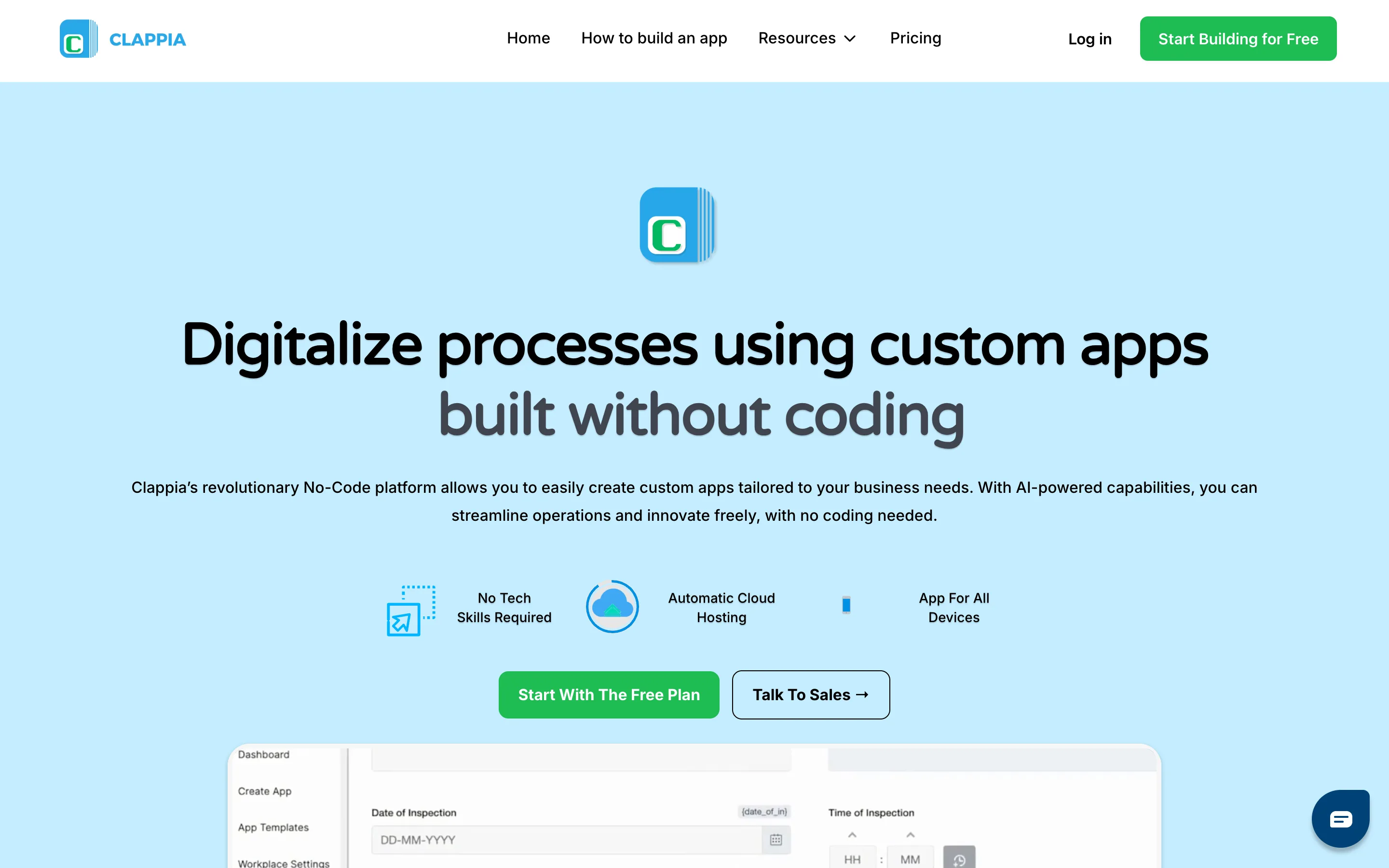
Clappia is a no-code platform for building custom mobile and web apps for real business operations — inspections, approvals, field data collection, dispatch, and client-facing portals. Unlike Airtable-front-end tools, it is a full app builder: you design the screens, the data, the automations, and the dashboards in one place. Apps run on Android, iOS, and the web from a single build.
Where Stacker leans on Airtable for its backend, Clappia includes its own data layer, so you are not stitching together and paying for two separate products. It is built for teams that work in the field as much as at a desk.
You can add role-based access for internal staff and external users, capture data offline and sync it later, and route submissions through multi-level approval workflows. That combination is what makes it a genuine Stacker replacement rather than a look-alike front-end.
Where it beats Stacker:
Pros:
Cons:
Pricing: Free plan (free forever); paid plans from $6/user/month. G2 rating: 4.7/5. Best for: teams that need real mobile apps, offline data, and workflows — not just a database front-end.
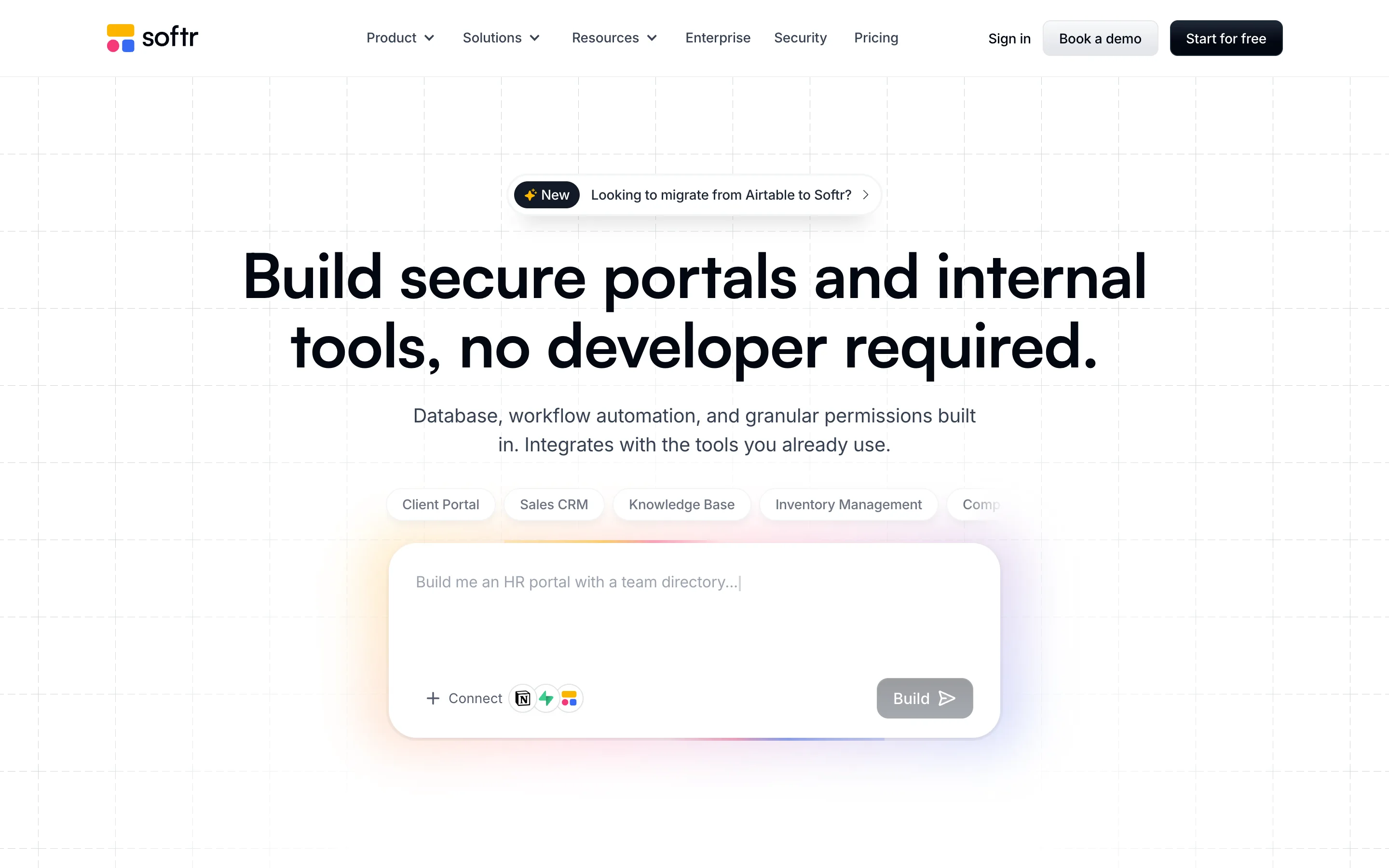
Softr turns Airtable and other sources into polished client portals, internal tools, and member websites without code. Its template gallery and drag-and-drop blocks make it fast to launch a good-looking, public-facing site. It is one of the most direct Stacker alternatives for portal use cases.
Softr has since added its own database, workflow automation, and granular permissions, so it is no longer only an Airtable skin. For customer portals and simple directories, it is hard to beat on speed.
Where it beats Stacker:
Pros:
Cons:
Pricing: Free plan; paid from $19/month (Basic). G2 rating: 4.7/5. Best for: customer portals and member sites where design matters most.
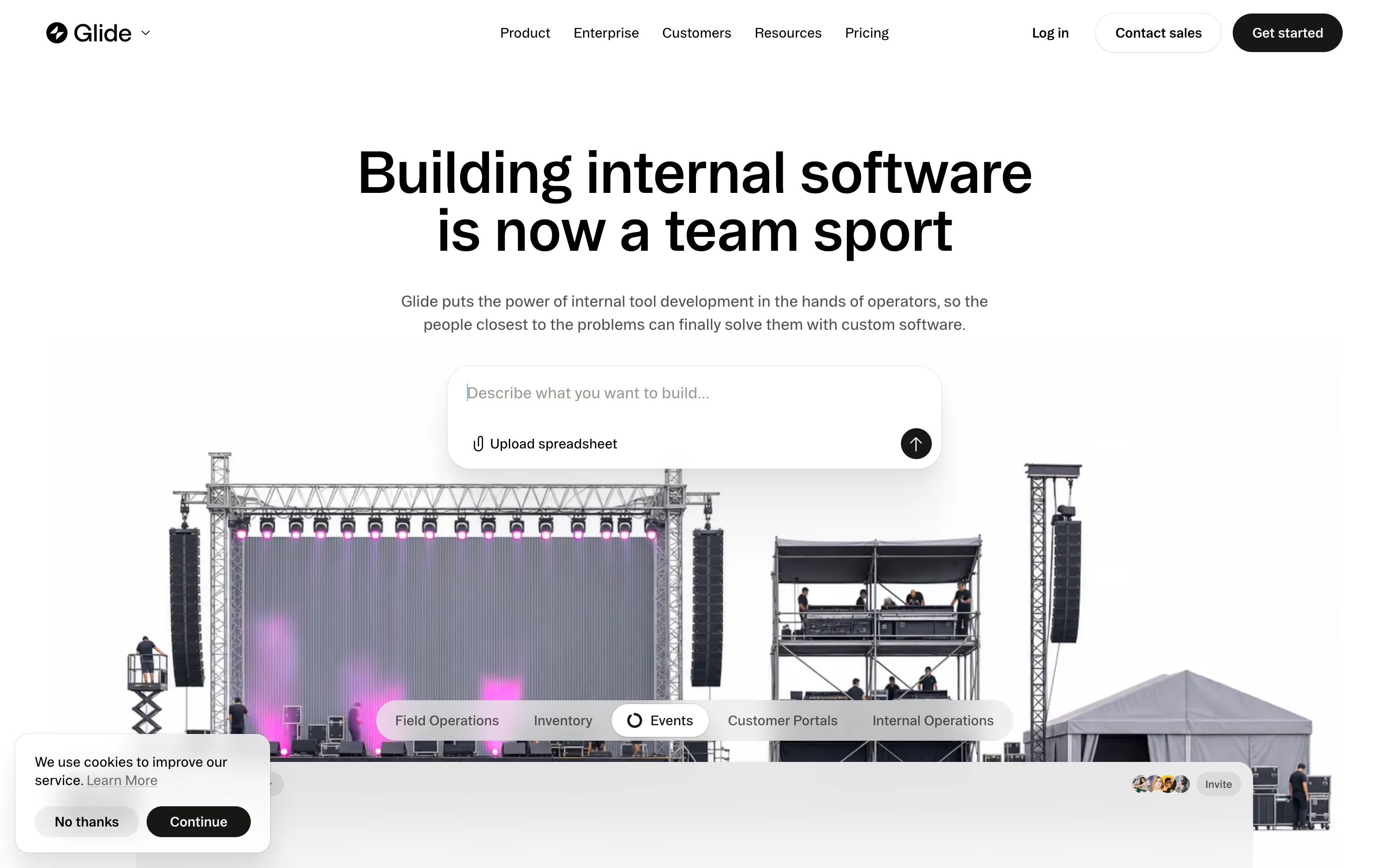
Glide builds clean, mobile-first progressive web apps from a spreadsheet or its own data source. It is popular for lightweight internal tools and field apps that need to look good on a phone. Its AI builder can generate an app from a plain-text description.
Glide shines when the priority is a simple, elegant mobile experience rather than deep back-office logic. Setup is quick and the results are polished.
Where it beats Stacker:
Pros:
Cons:
Pricing: Free tier; paid from $25/month (Maker). G2 rating: 4.7/5. Best for: mobile-first apps where design and speed matter.
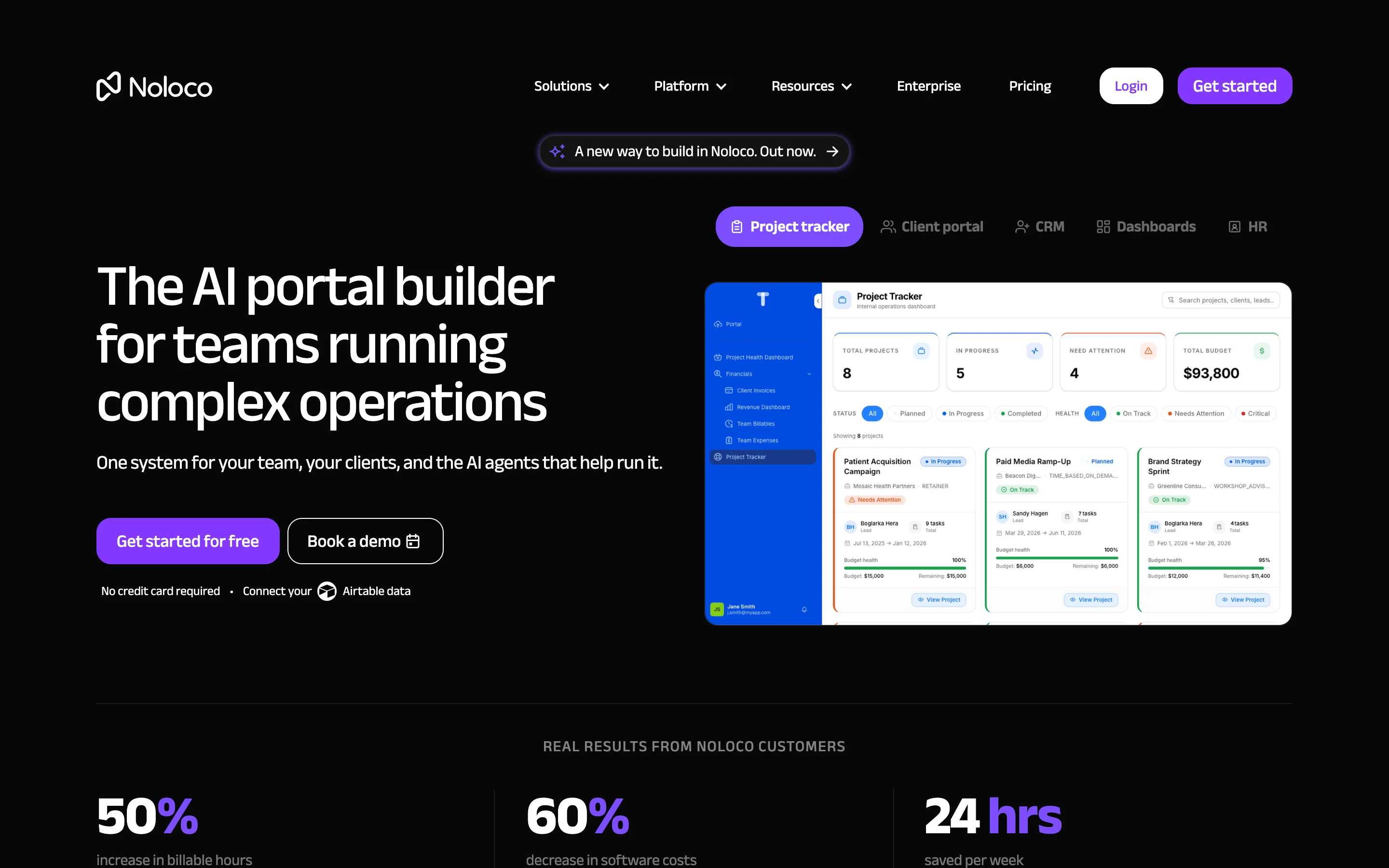
Noloco is an AI portal builder aimed at teams running complex operations on Airtable, Google Sheets, or SQL. It specializes in white-labeled client portals with row-level permissions for external stakeholders. It is one of Stacker's closest competitors on the portal front.
If you need secure, branded portals for clients or partners, Noloco's permissions model is a strong fit. It connects to your existing database rather than replacing it.
Where it beats Stacker:
Pros:
Cons:
Pricing: Free plan (14-day Business trial); paid from $39/month (Starter, ~4 users). G2 rating: 4.8/5. Best for: white-labeled client portals with granular permissions.
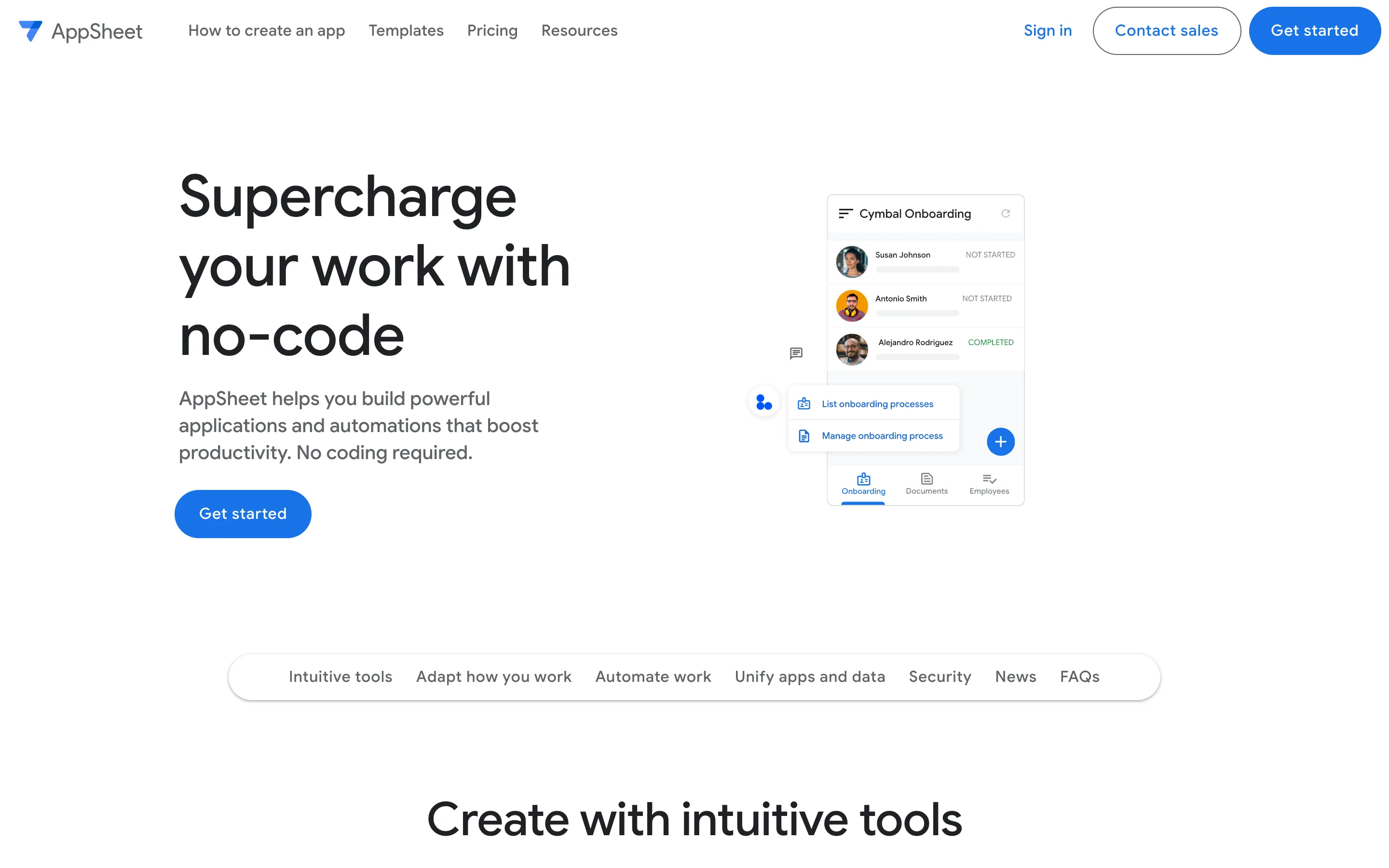
AppSheet is Google's no-code platform for building apps from Google Sheets, Excel, and other sources, and a natural pick for teams already living in Google Workspace. It supports mobile apps, basic automation, and offline use. The tight Workspace integration and low entry price make it attractive for internal tools.
It is capable, though it inherits a spreadsheet-centric data model that can get awkward for complex, relational apps.
Where it beats Stacker:
Pros:
Cons:
Pricing: Free to start (up to 10 users); paid from $5/user/month. G2 rating: 4.8/5. Best for: Google Workspace teams building internal apps.
Airtable is a flexible relational database that many no-code portals — Stacker included — sit on top of. Its Interfaces feature adds a lightweight app layer over your tables, and for data-heavy teams it is a powerful foundation. As the data layer, it is best in class.
Airtable itself is more database than portal, so external-facing apps often still need a separate front-end tool on top.
Where it beats Stacker:
Pros:
Cons:
Pricing: Free plan; paid from $20/user/month. G2 rating: 4.5/5. Best for: teams that want a strong database with internal app views.
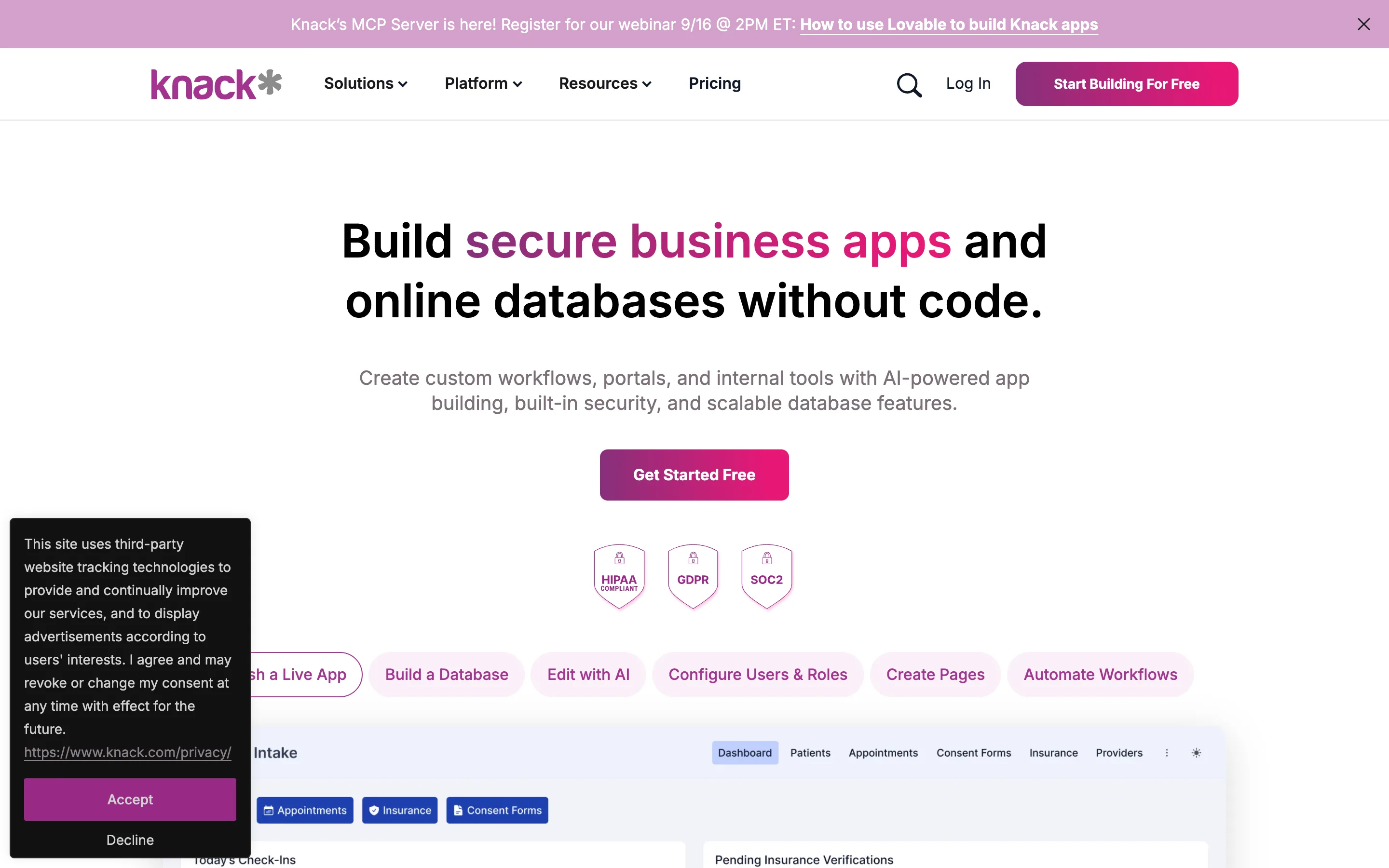
Knack builds secure business apps and online databases without code, including portals and internal tools. It is database-first, with roles, workflows, and e-commerce options, and has been a steady no-code option for years. Its newer AI builder speeds up initial setup.
Knack suits structured data apps where permissions and records matter more than visual polish.
Where it beats Stacker:
Pros:
Cons:
Pricing: No free plan (14-day trial); paid from $19/month (Starter). G2 rating: 4.3/5. Best for: structured database apps and portals.
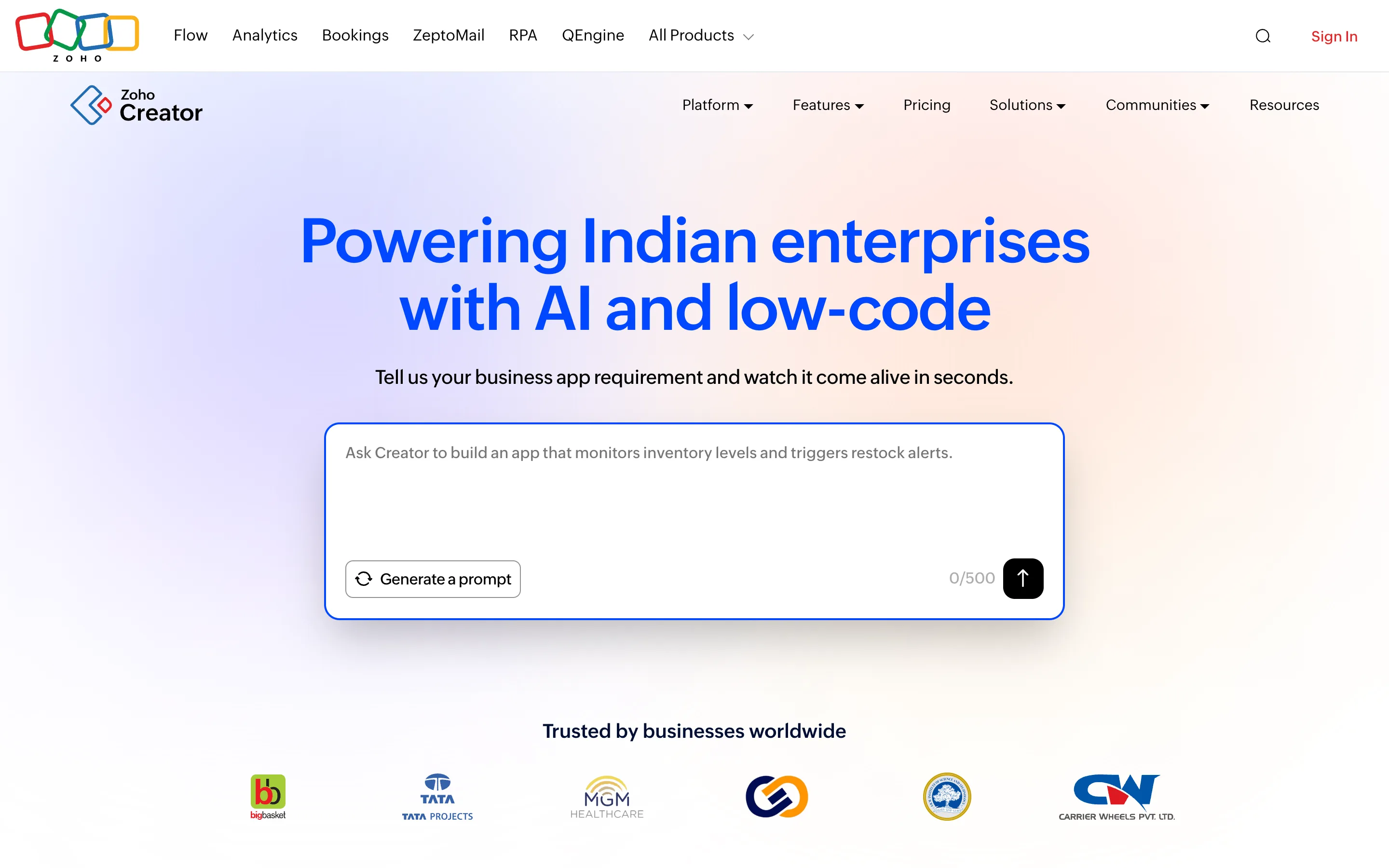
Zoho Creator is a low-code platform for building custom apps, part of the broader Zoho suite. It offers mobile apps, workflows, and analytics, and for Zoho customers it slots neatly into existing tools. Its value is strongest when you already use Zoho CRM, Books, or People.
Outside the Zoho ecosystem, the learning curve is steeper than pure no-code tools.
Where it beats Stacker:
Pros:
Cons:
Pricing: No free plan (15-day trial); paid from $8/user/month. G2 rating: 4.3/5. Best for: teams standardized on Zoho.
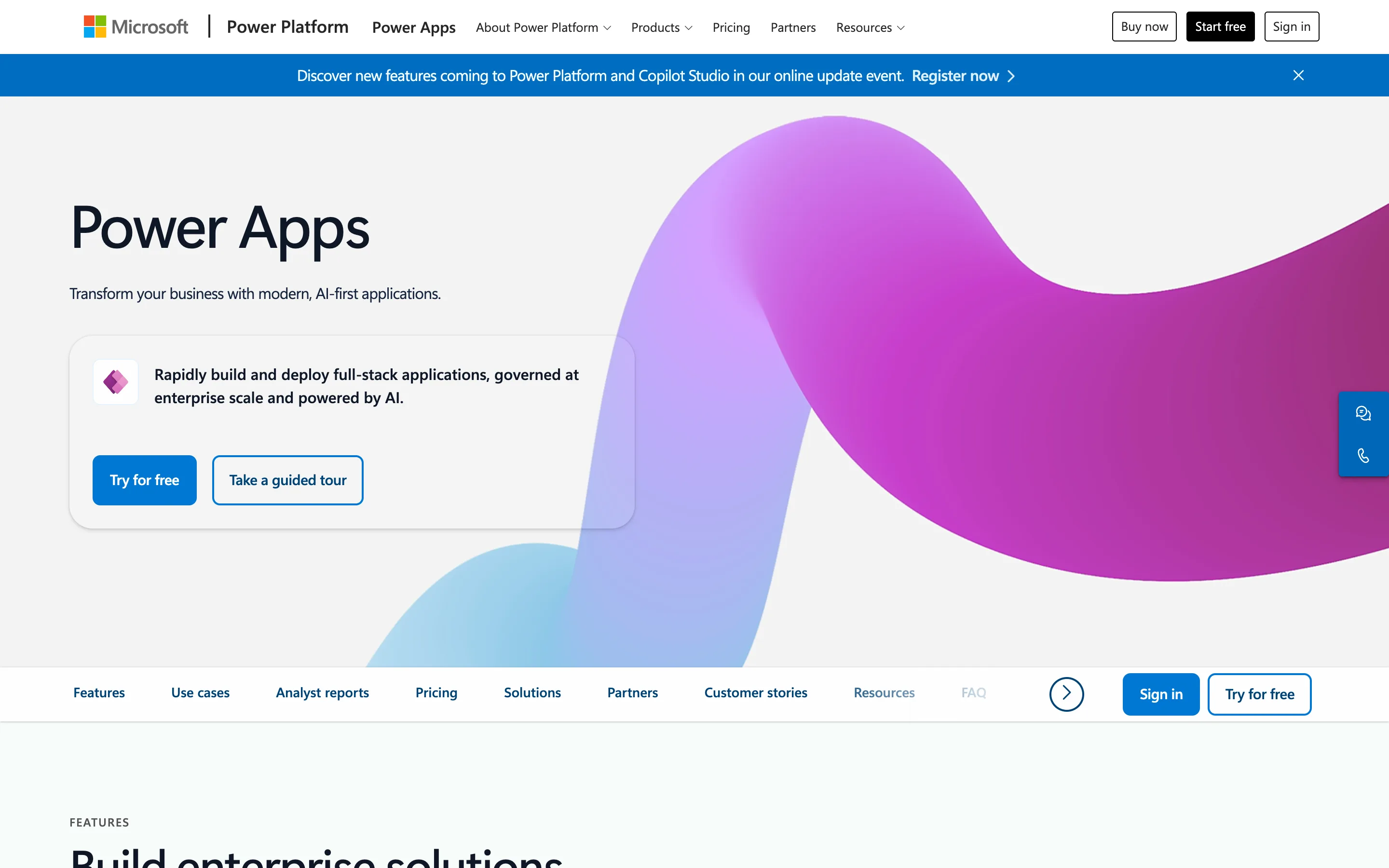
Power Apps is Microsoft's low-code platform for building business apps on Dataverse and Microsoft 365 data. It is powerful and enterprise-grade, with deep integration into Teams, SharePoint, and Azure. Large organizations already on Microsoft often default to it.
The trade-off is complexity: licensing and Dataverse add a learning curve, and it is best only inside the Microsoft stack.
Where it beats Stacker:
Pros:
Cons:
Pricing: No free plan (trial); paid from $20/user/month. G2 rating: 4.3/5. Best for: enterprises standardized on Microsoft.
Across construction, manufacturing, field services, logistics, real estate, healthcare, and professional services, teams use Clappia to replace spreadsheets and paper with real apps — not just a nicer view of a database. You can build a property inspection app, an automated field inspection workflow, or a field data collection tool, and give each stakeholder the right access through role-based portals.
The difference from an Airtable front-end is that mobile capture, offline sync, approval routing, and dashboards are all native, so one platform covers the whole process. If you are also weighing spreadsheet-based tools, our guide to Google Sheets alternatives and the no-code cheatsheet go deeper.
The teams moving off Stacker rarely want a fancier database — they want the app, the mobile capture, and the approval flow in one place, at a price they can predict.
Ready to replace Stacker? Build your first app and client portal free — unlimited apps, workflows, and offline capture, with no credit meter.
Start freeMatch the tool to the job:
Explore more head-to-head picks in our roundups of the top no-code AI app builders and best no-code platforms in the USA.
Every tool here can replace part of what Stacker does, but only a few replace all of it. Softr and Noloco are excellent if your need is purely portals; Glide wins on mobile polish; AppSheet, Airtable, Knack, Zoho Creator, and Power Apps each fit teams anchored to a specific ecosystem. For most teams that want the app, the mobile and offline capture, the portal, and the workflow in one predictable, affordable platform, Clappia is the strongest overall Stacker alternative — and its free-forever plan means you can prove it out before you pay.
Ready to move off a credit meter and build the real thing? Start building for free and ship your first app and client portal this week — with offline capture, role-based access, and workflows included from day one. Your team gets a tool it can actually run in the field, not just another database view.
Yes. Stacker is still operating, but it relaunched as "Stacker AI" in September 2025 and moved to a credit-based pricing model in 2026. That shift in focus and pricing is the main reason teams who chose it as a simple Airtable-portal tool are now comparing alternatives.
Google AppSheet is the cheapest on paper at about $5/user/month, but it is tied to a spreadsheet and Google data model, its multi-level approvals are fiddly, and it lacks strong offline field capture. For nearly the same price, Clappia ($6/user/month, plus a free-forever plan) adds native mobile apps, true offline mode, built-in workflow automation, and role-based portals — the advanced capabilities most teams actually need, without the spreadsheet ceiling.
Clappia has a free plan where you can build unlimited apps, use almost every field, create workflows, add role-based access, share with your team, and test everything completely — you only pay when it meets your requirements. Softr and Glide also offer free tiers that are useful for small portals and mobile apps, though they cap app users and usage sooner.
Clappia is the strongest free Stacker alternative because its free-forever plan lets you build real mobile and web apps with workflows and offline capture, not just a database front-end. For pure client portals, Softr's free plan and Noloco's free plan are good starting points.
Yes. Clappia matches Stacker's portal and app use cases and goes further with native Android and iOS apps, offline data capture, built-in workflow automation, and its own database — so you do not need Airtable underneath. With a free-forever plan and predictable $6/user/month pricing, it is a strong fit for teams that want the whole process in one place.
 Get Started – It’s Free
L374, 1st Floor, 5th Main Rd, Sector 6, HSR Layout, Bengaluru, Karnataka 560102, India
3500 S DuPont Hwy, Dover,
Kent 19901, Delaware, USA


.svg)



3500 S DuPont Hwy, Dover,
Kent 19901, Delaware, USA
L374, 1st Floor, 5th Main Rd, Sector 6, HSR Layout, Bengaluru, Karnataka 560102, India

.png)