

Modern businesses face increasing pressure to provide real-time visibility into order status and delivery progress. As customer expectations rise for instant updates and precise delivery ETAs—from e-commerce retailers and food delivery services to logistics providers and manufacturing distributors—the need for robust order tracking software becomes critical. Traditional phone calls, spreadsheets, and email updates simply cannot keep pace with the dynamic requirements of modern order fulfillment and delivery management.
Order tracking software designed for businesses enables systematic monitoring of orders from placement through final delivery. From capturing order details and tracking shipment status to updating customers in real-time and collecting delivery confirmations, the right platform transforms how businesses manage the entire order-to-delivery lifecycle. Clappia delivers a no-code solution that empowers operations teams to build custom order tracking applications tailored to their specific fulfillment processes and customer communication requirements.
Order tracking software encompasses the comprehensive monitoring and management of orders throughout their entire lifecycle—from initial order placement through warehouse picking, packaging, shipment dispatch, in-transit tracking, and final delivery confirmation. Effective order tracking connects every touchpoint in the fulfillment process, provides real-time status visibility to customers and internal teams, automates status update notifications, and maintains complete delivery documentation for dispute resolution.
The complexity of modern order fulfillment requires software that handles multiple variables simultaneously. Order statuses must be instantly accessible to customers through self-service portals, delivery personnel need mobile access to route information and customer details, warehouse teams require real-time picking and packing workflows, and management needs aggregate visibility across all active orders. When orders are poorly tracked, businesses face increased customer service inquiries, missed delivery commitments, lost shipments, and poor customer satisfaction scores.
Modern order tracking extends beyond simple status updates. It integrates with inventory management systems, automates customer communication across multiple channels, provides live GPS tracking of delivery vehicles and field personnel, enables electronic proof of delivery with signatures and photos, and offers predictive delivery ETAs based on real-time conditions. The software becomes the operational hub where all order fulfillment data converges, enabling proactive customer service rather than reactive problem-solving.
Logistics tracking applications must deliver comprehensive capabilities that address order fulfillment needs. Operations teams track order progress through every fulfillment stage—order received, payment confirmed, items picked, shipment packed, out for delivery, and delivered. Real-time status updates eliminate customer uncertainty and reduce "where is my order" inquiries.
Order tracking dashboards provide instant visibility into all active orders, highlight overdue shipments requiring attention, show delivery performance metrics by carrier or route, and enable drill-down from summary views into specific order details. Warehouse managers, logistics coordinators, and customer service teams access the same real-time information ensuring consistent customer communication.
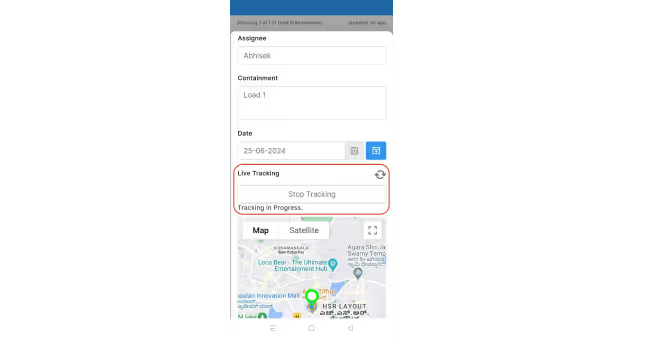
Live tracking capabilities enable real-time monitoring of delivery vehicles and field personnel. GPS location capture tracks driver locations continuously, displays delivery routes on interactive maps, calculates distance traveled and estimated arrival times, and provides geofencing alerts when drivers reach delivery zones.
Customers receive shareable tracking links showing delivery vehicle locations in real-time, similar to ride-sharing apps. This transparency dramatically improves customer satisfaction by eliminating delivery uncertainty. Dispatchers optimize routes dynamically based on traffic conditions, prioritize urgent deliveries, and reassign orders when delays occur.
Proactive customer communication reduces anxiety and service inquiries. Workflow automation enables automatic status notifications through multiple channels. Email notifications send order confirmations, shipment dispatched alerts, and delivery completion messages. WhatsApp integration delivers instant mobile updates in customers' preferred messaging app. SMS notifications provide text updates to customers without smartphone apps.
Automated notifications include order tracking URLs, estimated delivery times, driver contact information, and delivery instructions. Customers receive updates at every milestone without needing to contact customer service. Notification templates customize for different order types, delivery methods, and customer segments.
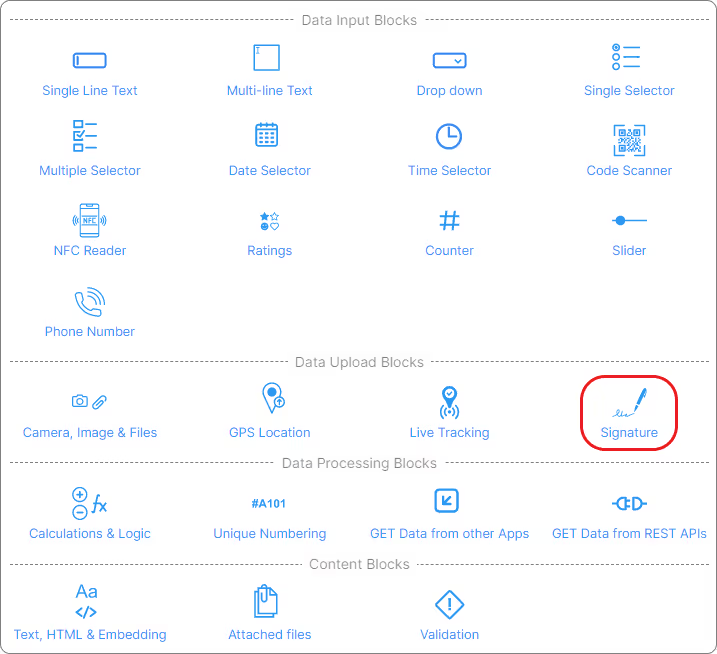
Digital signature capture enables delivery personnel to collect customer signatures confirming receipt on mobile devices. Camera and file upload captures photos of delivered packages, damaged items requiring documentation, and delivery location proof. Evidence uploads instantly to cloud storage with automatic timestamps and GPS coordinates.
Dynamic PDF generation creates professional delivery receipts, packing slips, and delivery confirmation documents automatically. These documents include order details, customer signatures, delivery timestamps, and photo evidence—providing complete delivery documentation for billing, disputes, and regulatory compliance.
Traditional order management platforms often require expensive licensing, lengthy implementation projects, and ongoing IT maintenance. Many solutions lack flexibility for customization, forcing businesses to adapt processes to software limitations rather than software adapting to business needs. Clappia's no-code platform revolutionizes this approach by enabling operations teams to design and deploy custom order tracking applications without writing code.
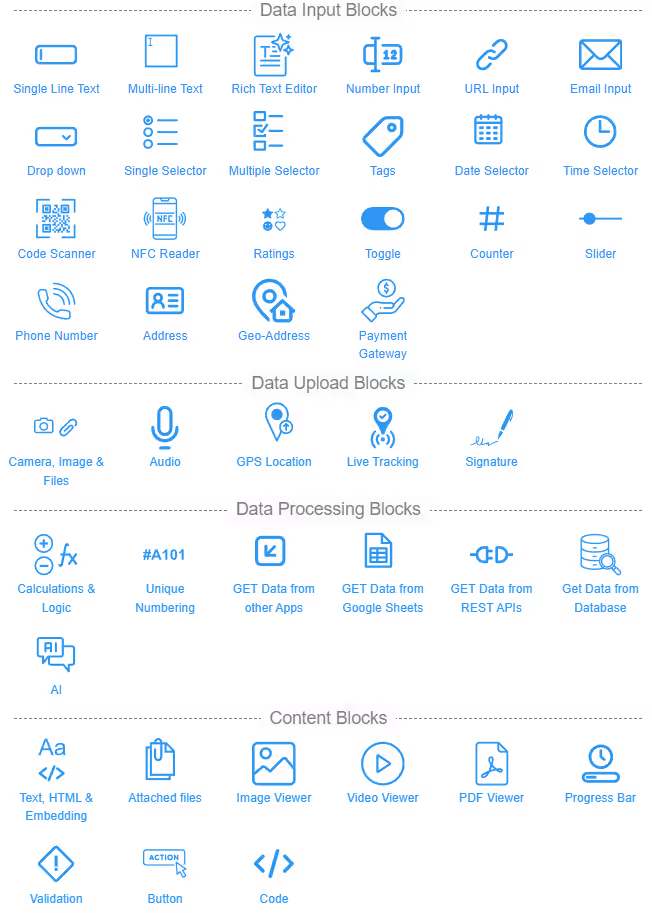
The platform provides pre-built blocks addressing order tracking needs. Single Line Text and Multi-Line Text capture order numbers and delivery instructions. Drop Down selectors standardize order statuses, delivery methods, and payment types. Date Selector and Time Selector record order dates and delivery time windows. Number Input tracks order quantities and amounts.
Phone Number blocks with country code selection capture customer contact information. Email Input validates customer email addresses. Address capture with geo-address search enables precise delivery location selection with GPS coordinates.
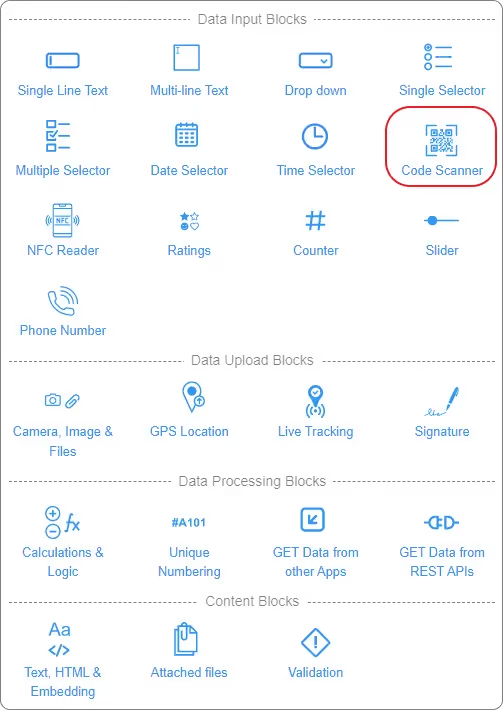
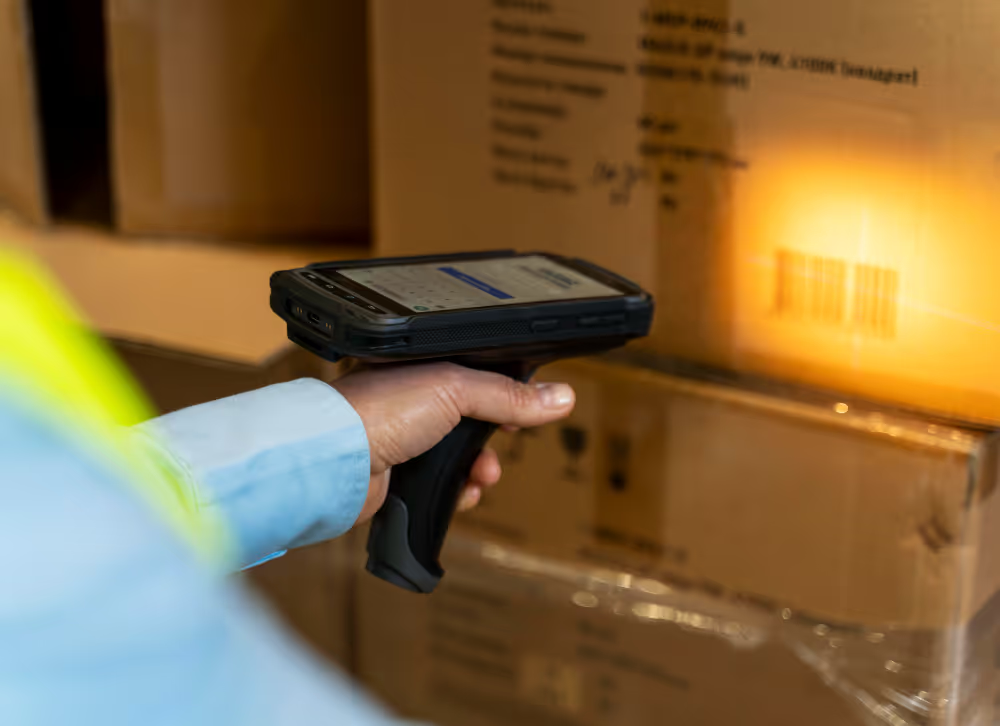
QR code and barcode scanning enables rapid order verification during fulfillment. Warehouse personnel scan order numbers from packing slips, product barcodes during picking, and shipping labels during dispatch. Delivery drivers scan package barcodes at delivery to confirm correct item delivery. Scanning eliminates manual data entry errors and accelerates fulfillment operations.

Formula blocks perform automatic calculations for order totals, delivery charges, tax amounts, and payment processing fees. These Excel-like formulas enable complex pricing logic without programming. Calculations update in real-time as order details change, ensuring pricing accuracy.
Unique ID generation automatically creates sequential order numbers, tracking IDs, and invoice numbers with custom prefixes. Every order receives a unique identifier for perfect traceability across systems.
Effective order tracking depends on accurate, timely data from field delivery personnel and warehouse operations. Mobile applications for Android and iOS deliver full order tracking functionality on smartphones and tablets. Delivery drivers access order lists without returning to dispatch offices, mark orders delivered directly from customer locations, and capture delivery proof instantly.
Offline mode functionality ensures delivery documentation continues even in areas with poor mobile connectivity. Drivers complete delivery confirmations, capture signatures and photos offline, with automatic synchronization once network connection resumes. This reliability is critical for rural deliveries and areas with spotty coverage.
Field data collection capabilities enable comprehensive delivery documentation. Drivers record delivery timestamps, collect customer feedback ratings, note delivery exceptions or issues, and capture package condition photos. All data uploads immediately to centralized systems where customer service teams monitor for issues requiring follow-up.
Customer-facing order tracking portals provide self-service status visibility without customer service intervention. Customers enter order numbers or tracking IDs to view current order status, see delivery vehicle locations on maps, receive estimated delivery times, and access delivery history with photos and signatures. Self-service portals dramatically reduce customer service inquiry volumes while improving customer satisfaction.
Order tracking software must integrate seamlessly with e-commerce platforms and shopping carts. REST API integrations connect with Shopify, WooCommerce, Magento, and custom e-commerce systems. Orders flow automatically from online stores into tracking systems, inventory updates synchronize bidirectionally, and delivery confirmations update order statuses in e-commerce platforms.
Database integration enables direct connections to MySQL, PostgreSQL, and Microsoft SQL Server systems. Order data flows into ERP systems for invoicing and financial reporting. Inventory levels update automatically when orders ship. Payment processing integrates with accounting systems for reconciliation.
Businesses using third-party logistics providers (3PL) or multiple carriers need carrier integration capabilities. APIs connect with shipping carriers for rate calculation, label generation, tracking number retrieval, and shipment status updates. Multi-carrier support enables businesses to select optimal carriers based on delivery speed, cost, and destination.
Google Sheets synchronization provides flexible reporting for operations teams. Daily order summaries export automatically, delivery performance metrics update in real-time, and custom operational reports generate without programming. The flexibility supports both structured dashboards and ad-hoc analysis.
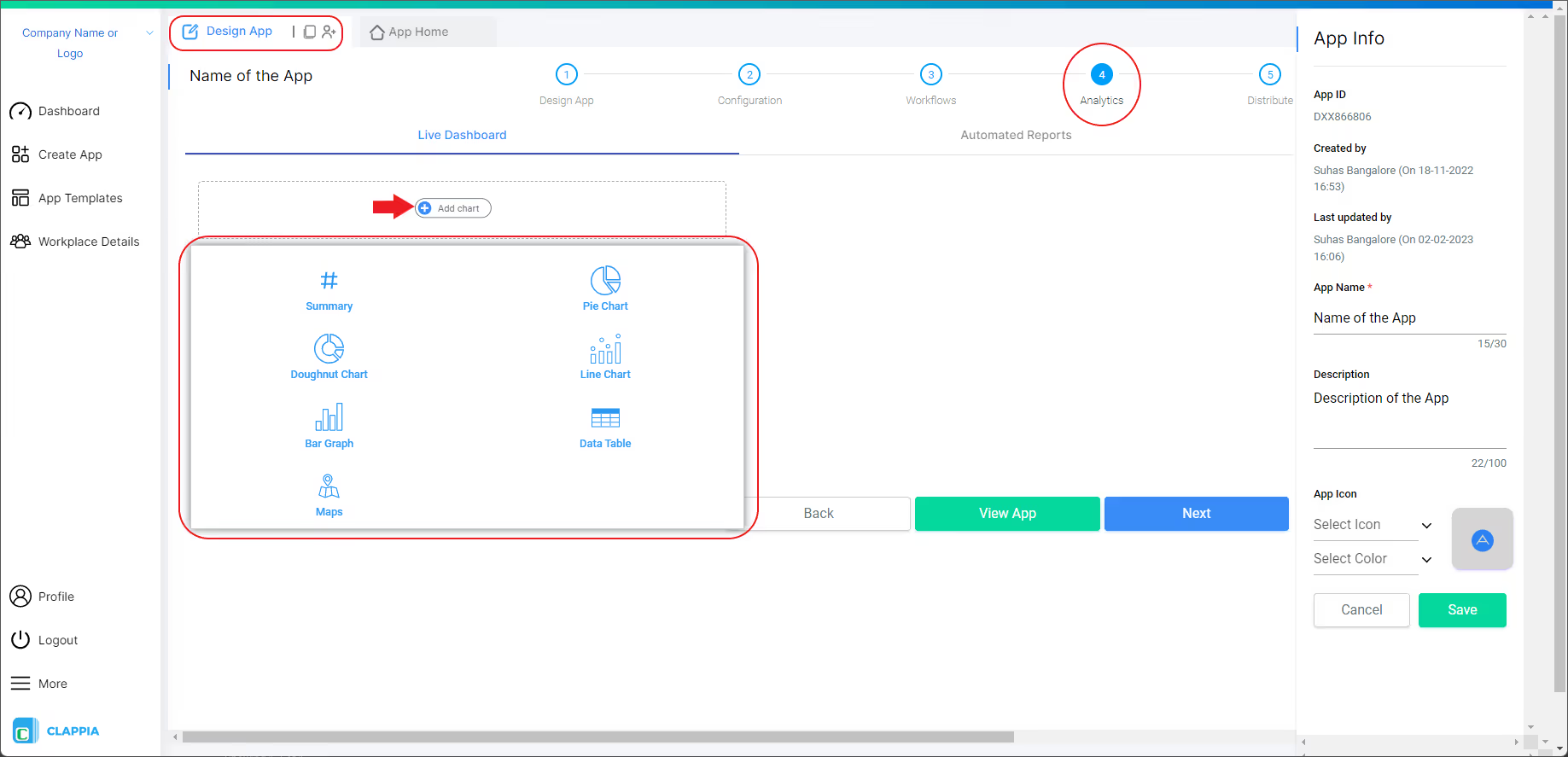
Order tracking software must provide instant visibility into operational performance. Analytics dashboards display critical metrics including total active orders by status, on-time delivery performance rates, average delivery time by route or carrier, customer satisfaction scores, and order volume trends.
Bar charts, line graphs, and pie charts visualize fulfillment trends. Operations managers identify delivery bottlenecks, under-performing carriers, and routes requiring optimization. Real-time visibility enables proactive problem-solving before customer complaints arise.
Automated reporting delivers scheduled performance summaries to stakeholders. Daily delivery completion reports arrive automatically each morning. Weekly performance analysis aggregates on-time delivery rates, customer feedback, and operational costs. Monthly executive summaries consolidate order volumes, revenue, and growth trends.
Complete communication logs maintain records of all customer notifications, delivery confirmations, and issue resolutions. When customer disputes arise, teams access complete interaction history proving what notifications were sent, when deliveries occurred, and what evidence was captured. This documentation protects businesses from fraudulent claims and supports customer service resolution.
Order tracking software enables efficient delivery fleet management. Dispatchers assign orders to drivers based on location proximity, capacity availability, delivery time windows, and driver skills. Route optimization algorithms sequence stops for minimum travel time and fuel consumption.
Drivers receive optimized route lists on mobile devices showing delivery sequence, customer addresses with map navigation, special delivery instructions, and customer contact information. Dynamic routing enables mid-route adjustments when urgent orders arise or delivery exceptions occur.
Delivery performance tracking measures driver efficiency, on-time delivery rates, customer satisfaction scores, and delivery completion times. Performance dashboards identify top-performing drivers deserving recognition and drivers requiring additional training or support. Data-driven performance management replaces subjective assessments with objective metrics.
Order tracking integrates with fleet management for vehicle maintenance scheduling, fuel consumption tracking, mileage recording, and service reminders. Preventive maintenance prevents delivery disruptions from vehicle breakdowns. Fleet utilization analysis optimizes vehicle allocation and identifies opportunities for fleet expansion or consolidation.
Proactive communication transforms customer experience. Customers receive automatic order confirmations within minutes of placement, shipment dispatch notifications with tracking links when orders leave warehouses, delivery ETAs with live tracking as drivers approach delivery locations, and delivery confirmations with photos and timestamps upon completion.
This transparency builds trust and reduces customer anxiety about order status. Customers feel informed and in control rather than uncertain and frustrated.
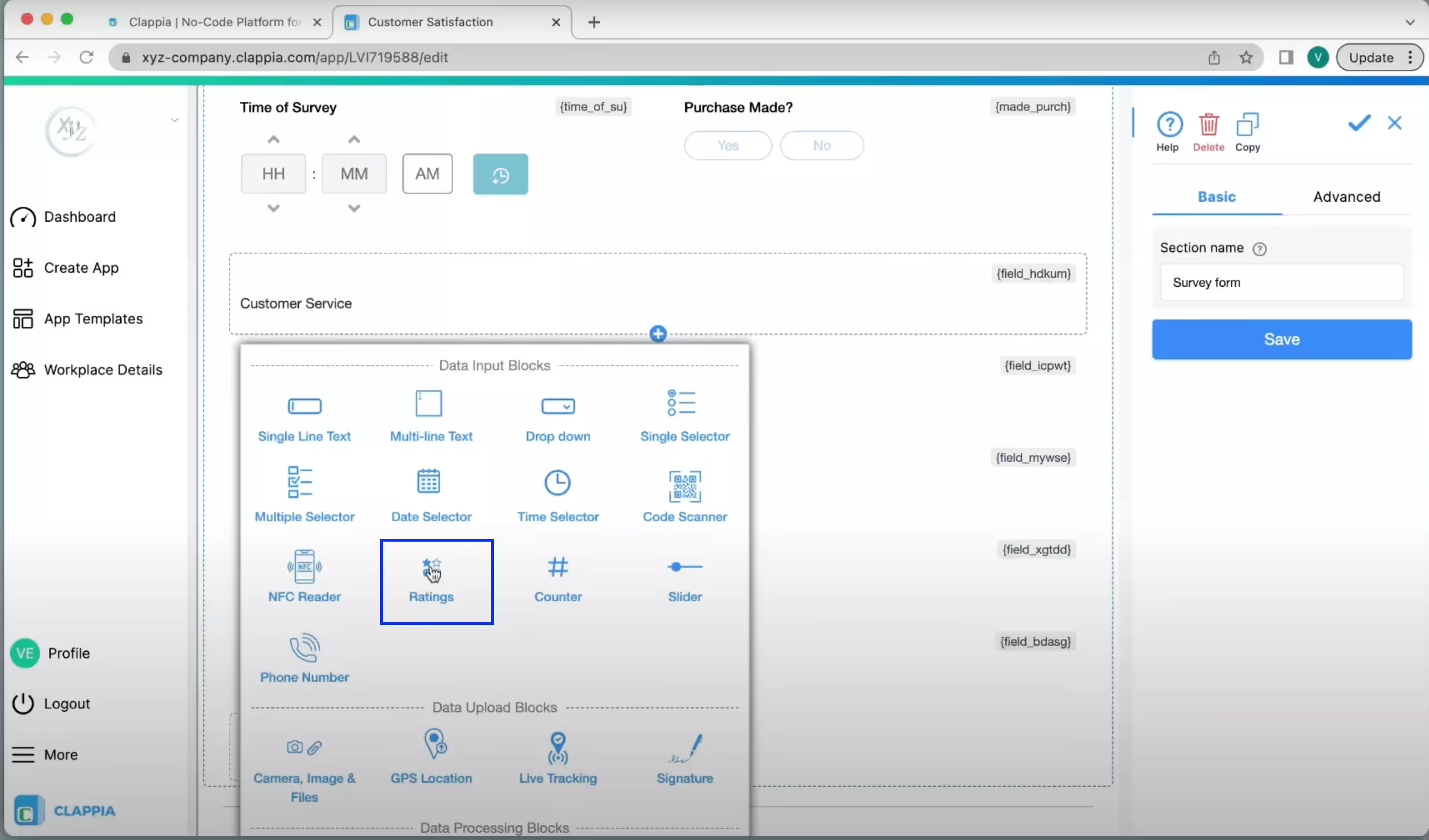
Ratings blocks enable systematic customer feedback collection. Delivery confirmations include requests for customer ratings of delivery experience, product satisfaction, and driver courtesy. Feedback aggregates automatically into satisfaction dashboards showing trends by product, carrier, route, and time period.
Low ratings trigger automatic follow-up workflows. Customer service teams contact dissatisfied customers proactively to resolve issues before negative reviews appear online. This proactive service recovery significantly improves customer retention.
When delivery issues occur—wrong addresses, recipient unavailable, damaged packages, or access problems—field personnel document exceptions immediately using mobile apps. Photos capture damaged items, signatures confirm failed delivery attempts, and notes explain circumstances.
Exception workflows automatically notify customer service teams, trigger customer communication, and create resolution tasks. Rapid exception handling prevents minor issues from escalating into major customer complaints.
Growing businesses need order tracking software that scales with operations. Clappia supports expansion from single locations to multi-warehouse distribution networks without platform changes. Centralized order visibility across locations enables coordinated inventory allocation, transfer order management between warehouses, and consolidated performance reporting.
Multi-channel support manages orders from e-commerce websites, mobile apps, phone orders, in-store purchases, and B2B portals through unified tracking systems. Consistent tracking experiences across channels improve operational efficiency and customer satisfaction.
Businesses operating multiple brands or franchise locations require brand-specific customization. White-labeled mobile apps provide branded delivery tracking experiences with custom logos, colors, and messaging. Each franchise location accesses centralized tracking infrastructure while maintaining brand independence.
Global businesses manage international shipments with multi-currency support, customs documentation, and international carrier integration. Order tracking accommodates different shipping methods, delivery time expectations, and regulatory requirements across countries. Multi-language support enables tracking in customers' preferred languages.
Implementing order tracking software doesn't require lengthy development projects or expensive consultants. Clappia's no-code platform enables operations teams to start building immediately without specialized technical skills.
The drag-and-drop interface uses concepts that operations managers and logistics coordinators understand intuitively. Pre-built templates provide starting points for order management, delivery tracking, and customer communication. Customization transforms templates into solutions matching specific business processes, delivery methods, and customer expectations.
Free plans support unlimited order tracking applications, enabling businesses to build and test solutions before committing to paid features. As order volumes grow, professional plans add capabilities like white-labeled mobile apps, increased submission limits, and premium integrations. The pricing model scales with business growth, ensuring cost-effectiveness at every stage.
Video tutorials, comprehensive help documentation, and an active community forum provide assistance during implementation. Scheduled demos showcase order tracking capabilities and answer specific questions about logistics and fulfillment use cases.
Order tracking software transforms fulfillment operations from reactive problem-solving to proactive customer service. Real-time visibility into order status enables better decisions about inventory allocation, delivery prioritization, and customer communication. Automation reduces manual tracking effort while improving accuracy and consistency. Analytics reveal operational improvement opportunities and customer satisfaction drivers.
Clappia empowers operations teams to build custom order tracking solutions matching unique business requirements. The no-code platform accelerates deployment while maintaining flexibility for continuous enhancements. Mobile-first design ensures usability for delivery drivers, warehouse personnel, and field service teams. Comprehensive integration connects order tracking with e-commerce, inventory, and accounting systems.
Businesses implementing intelligent order tracking gain competitive advantages through improved delivery reliability, enhanced customer satisfaction, reduced operational costs through route optimization, proactive customer communication, and data-driven process improvements. The investment in order tracking digitalization pays dividends through reduced customer service costs, improved customer retention, and operational efficiency.
Explore Clappia's capabilities and discover how order tracking software can revolutionize your fulfillment and delivery operations.
Start Building Today: Sign up for free and create your first order tracking application in minutes.
Transform Your Order Management - Get Started Today
Build custom order tracking applications tailored to your business fulfillment processes without writing code.


L374, 1st Floor, 5th Main Rd, Sector 6, HSR Layout, Bengaluru, Karnataka 560102, India
3500 S DuPont Hwy, Dover,
Kent 19901, Delaware, USA


.svg)




3500 S DuPont Hwy, Dover,
Kent 19901, Delaware, USA
L374, 1st Floor, 5th Main Rd, Sector 6, HSR Layout, Bengaluru, Karnataka 560102, India